Black Friday, scratch to reveal your discount, up to 30% off, today only5% off 2 items | 10% off 3+ itemsFree shipping to EuropeCustomer service 7 days a week | Excellent Google reviews
Guides · 15 min
Tennis Bracelet: How to Choose the Stones, Width, Length and Metal
Tennis bracelet guide: natural or lab-grown diamond, moissanite, sapphire or cubic zirconia; width, carats, length; gold, platinum, silver or steel; clasp, price and care.
Simatta Bijoux · 28 October 2026
1978
Birth of the name (US Open)
+ 1 to 2 cm
On top of wrist size
4
Prongs per stone recommended
10
Diamond hardness (Mohs)
In short
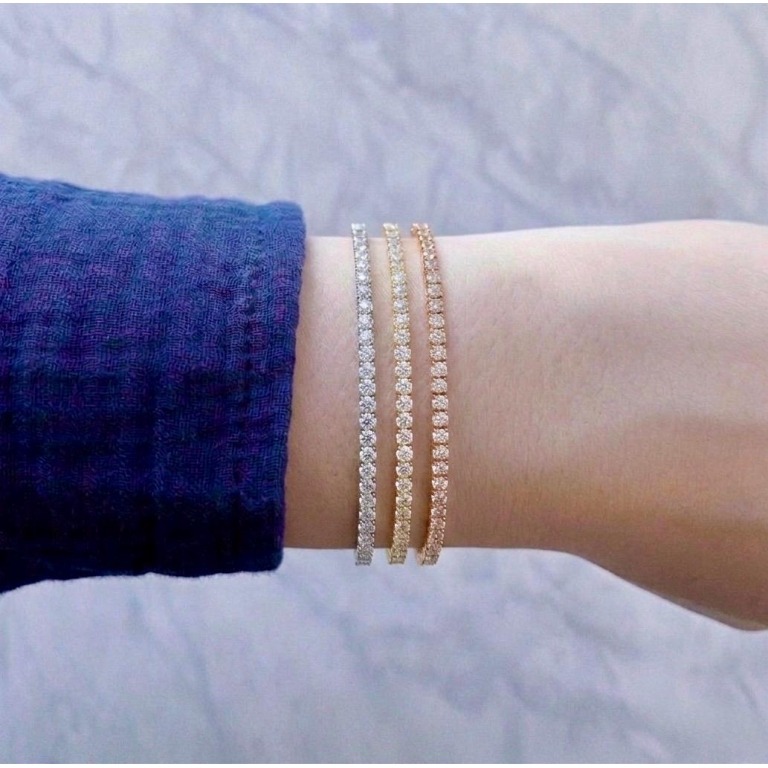
A tennis bracelet, also called a line bracelet or rivière bracelet, is an unbroken line of identical stones, each set individually on small hinged links that go all the way around the wrist. They come at every price, from fashion bracelets in stainless steel and cubic zirconia to high-jewellery pieces in platinum and natural diamonds. Six things matter when choosing one: the stone (natural or lab-grown diamond, moissanite, sapphire, cubic zirconia…), the width (from a very fine 1.5 mm or so to a spectacular 7 mm and more), the stone weight in carats, the length (your wrist size plus 1 to 2 cm), the metal (gold, platinum, 925 silver, vermeil, gold-plated or stainless steel) and the craftsmanship: setting, links and safety clasp.
What is a tennis bracelet?
A tennis bracelet is a continuous line of stones of the same size, with no gap, on a chain of hinged links. Each stone has its own setting, which makes the bracelet supple: it follows the movement of the wrist instead of staying stiff like a bangle. Before it got its current name, it was simply called a “diamond line” or “line bracelet”; in French it is still often called a bracelet rivière, a “river” of stones.
Why is it called a tennis bracelet? Because of the American tennis player Chris Evert. During a US Open match, her fine diamond bracelet came undone; she had play stopped while she looked for it on the court. The story is often dated to 1987, but her team places it in 1978. Ever since, the bracelet has carried the name of the sport that made it famous. It works with jeans as well as an evening dress, on its own, with a watch or stacked with other bracelets.
Which stone should you choose for a tennis bracelet?
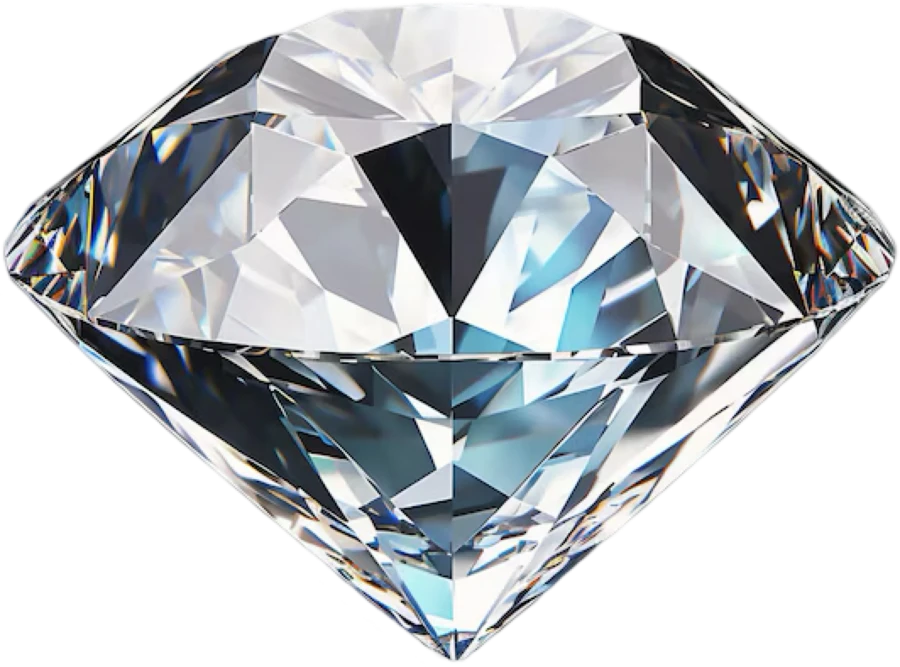
The stone sets the style of the bracelet, its durability and most of its price. Diamond, natural or lab-grown, remains the benchmark; moissanite and sapphire are hard enough to be worn every day; cubic zirconia, much cheaper, is mostly used for fashion jewellery. How they compare:
Nature
Pure carbon, formed in the Earth and mined
Hardness (Mohs)
10
Brilliance (refractive index)
2.42
Coloured flashes (“fire”)
Balanced
Colours
From D (colourless, rare) to Z (yellowish tint), plus very rare colours
Over time
Keeps its sparkle
Price (rough guide)
€€€€€
Nature
Pure carbon, created in a laboratory: a real diamond
Hardness (Mohs)
10
Brilliance (refractive index)
2.42
Coloured flashes (“fire”)
Balanced
Colours
Mostly colourless (D to H), also in colours
Over time
Keeps its sparkle
Price (rough guide)
€€€
Nature
Silicon carbide, created in a laboratory: a different stone
Hardness (Mohs)
9.25
Brilliance (refractive index)
2.65
Coloured flashes (“fire”)
Very strong, rainbow-like
Colours
Colourless (D to K), also in colours
Over time
Keeps its sparkle
Price (rough guide)
€€
Nature
Corundum, natural or created in a laboratory
Hardness (Mohs)
9
Brilliance (refractive index)
1.77
Coloured flashes (“fire”)
Subtle
Colours
All: blue, pink, yellow, white…
Over time
Keeps its sparkle
Price (rough guide)
€€ (lab-grown) to €€€€ (natural)
Nature
Created in a laboratory: a diamond imitation
Hardness (Mohs)
8 to 8.5
Brilliance (refractive index)
2.15
Coloured flashes (“fire”)
Strong
Colours
Colourless or any colour
Over time
Scratches and clouds within a few years
Price (rough guide)
€
Natural diamond is the traditional choice: a rare stone, formed in the Earth millions of years ago, chosen for its origin and symbolic value; it is also by far the most expensive. Lab-grown diamond has the same composition, hardness and sparkle: the two cannot be told apart with the naked eye, but it costs several times less for the same quality (see our lab-grown diamond guide). Moissanite is not a diamond: it sparkles even more, with stronger rainbow flashes, for a much gentler budget (full comparison in our moissanite vs diamond guide).
Sapphire, natural or lab-grown, brings colour: blue, pink, yellow or a rainbow gradient; colourless white sapphire sparkles far less than a diamond. Ruby, also a corundum with a hardness of 9, is used the same way; emerald, more fragile (7.5 to 8), calls for a bracelet worn with care. Cubic zirconia (CZ, not to be confused with zircon, a natural gemstone) imitates diamond at a very low price: it suits fashion jewellery in steel or silver, but it scratches and turns cloudy over time. Glass and crystal, softer still, are for costume jewellery only.
The shape matters too: the round brilliant cut is the most sparkling and the most common; princess (square), emerald or baguette cuts give a more graphic look, oval and heart shapes a softer one. Some bracelets alternate two stones, diamonds and sapphires for instance.
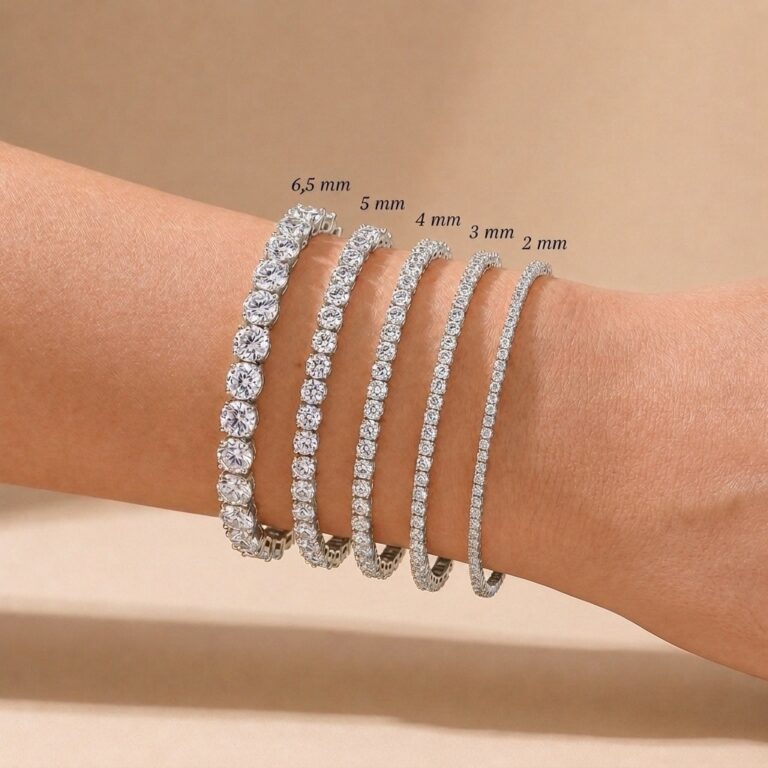
Which tennis bracelet width should you choose?
The width is roughly the diameter of the stones. It gives the bracelet its character, from a discreet thread of light to a piece that catches the eye from across the room. Widths range from about 1.5 mm to 7 mm and more; on a slim wrist, 2 to 4 mm remains the most harmonious. A quick guide:
1.5
1.5 to 2 mm
Very fine and discreet, to wear every day or stack with other bracelets.
2.5
2.5 to 3 mm
The most versatile, visible enough to sparkle, fine enough for every day.
4
4 mm
A more noticeable sparkle, elegant at the office as well as in the evening.
5
5 mm
A bold bracelet that gets noticed.
6
6 mm and more
The most spectacular, for an evening out, a wedding or a daring style; it is also the width of many men’s models.
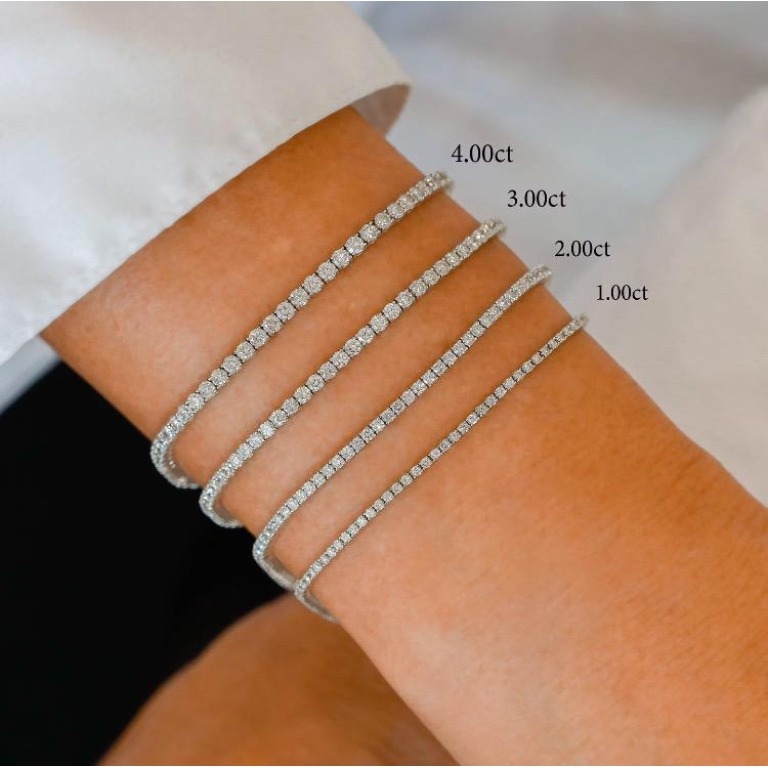
Diamond tennis bracelet: how many carats?
For a diamond tennis bracelet, what counts is the total weight of the stones, in carats (1 carat = 0.2 g, often written “ctw” for the total). Do not confuse it with the karats of gold, which indicate the share of pure gold in the metal. Most tennis bracelets weigh between 1 and 10 carats; beyond that, you enter high jewellery. For the same length, the higher the weight, the bigger each stone: on our French Riviera Gold, for example, 1 carat means diamonds of about 1.5 mm in diameter, 3 carats 2.3 mm and 10 carats 4.5 mm.
As a guide: 1 to 2 carats for a thread of light to wear every day, 3 to 5 carats for a versatile bracelet, from the office to the evening, 6 to 10 carats and more for a spectacular piece. On stones this small, G to H colour and VS to SI clarity are often enough for a beautiful sparkle to the naked eye; D to F and VVS grades cost more, especially in natural diamond. The small stones of a bracelet are usually not certified one by one: an overall report, from IGI for example, can describe the whole piece. For moissanite, the weight is often given in “diamond equivalent” carats, based on the size of the stones, because it is slightly lighter than diamond.
Which length should you choose?
Measure your wrist just above the wrist bone with a soft tape measure, or with a piece of string laid against a ruler, then add:
- + 1 cm for a snug fit, close to the wrist;
- + 1.2 to 1.5 cm for a classic fit;
- + 2 cm for a loose fit that moves around the wrist.
A 15 cm wrist therefore calls for a 16 cm bracelet for a snug fit and 17 cm for a loose fit. With stones of 5 mm or more, the space inside the bracelet is slightly reduced: add 0.5 cm. If in doubt, choose the next length up. Any length can be made to measure. A tennis bracelet that is too tight twists and strains its links; too loose, it spins and the clasp ends up on top.
Which metal should you choose for a tennis bracelet?
The metal changes the colour of the bracelet, its strength, its value and the way it ages. From the most precious to the most affordable:
18k, 14k or 9k
18k gold (750/1000, i.e. 75% pure gold) has the richest hue and is the choice of high jewellery; 14k gold (585/1000), slightly harder and less expensive, is an excellent compromise for a bracelet worn every day; 9k gold (375/1000) is the most affordable solid gold, sturdy, with a softer hue. Gold does not oxidise and can be handed down.
The most precious and the densest, naturally white (usually 950/1000). It does not turn yellow and needs no rhodium plating, but it develops a patina over time and costs more than gold.
925/1000, affordable and elegant. Bare, it tarnishes over time, which is why it is often rhodium-plated (bright white) or gold-plated (yellow or rose).
Solid 925 silver covered with a thick layer of gold (at least 2.5 microns in the United States, 5 in France): the look of gold for a price close to silver, more durable than simple plating.
A layer of gold over a base metal, often brass, or over silver. Affordable, but the layer gradually wears off with friction; the thinner it is (“gold flash”, “gold tone”), the faster it fades.
Very tough, it does not rust or tarnish, copes with water and is generally well tolerated by the skin. It is the metal of fashion tennis bracelets, most often with cubic zirconia, sometimes gold-coloured; its value remains low.
Gold comes in white, yellow and rose; white gold is usually rhodium-plated to look whiter, a plating to be renewed from time to time. White metals (white gold, platinum, rhodium-plated silver, steel) bring out the whiteness of the stones; yellow and rose warm up the bracelet and go well with a watch or gold jewellery. For diamonds or a piece to keep for a lifetime, gold and platinum are the safest choices; rhodium-plated silver and vermeil suit a gentler budget very well; steel, a fashion piece.
Setting, links, clasp: the details of a quality tennis bracelet
Two tennis bracelets can look alike in a photo and age very differently. Before you buy, check:
S
Setting
Prong settings (2, 3 or 4 prongs per stone, sometimes shared between two stones) let in the most light; 4 prongs hold each stone best. A bezel setting, a thin rim of metal around the stone, protects it better and looks softer; a channel setting, with the stones held between two metal walls, suits square or baguette cuts; an illusion setting places small stones on a shiny plate that makes them look bigger.
L
Links
Hinged and reinforced, without excessive play, they make the bracelet supple without twisting or showing gaps between the stones.
C
Clasp
The box clasp, almost invisible, is the most common; one or two figure-eight safety catches prevent you from losing the bracelet if the clasp opens. Some bracelets, mostly in silver or steel, have an adjustable slider clasp, handy if you do not know the wrist size.
S
Stones
All the same size and colour, well aligned, with no stone duller than the others. For larger stones, a certificate (GIA, IGI or HRD for diamond, GRA for moissanite) confirms their nature and quality.
How much does a tennis bracelet cost?
The range is huge: from a few dozen euros for a fashion bracelet in steel or silver with cubic zirconia to tens of thousands of euros for natural diamonds set in platinum. The price mainly depends on four things: the type of stone (for the same size, a natural diamond costs far more than a lab-grown diamond, which in turn costs more than a moissanite), the total weight in carats, the quality of the stones (colour, clarity, cut) and the metal. For a given budget, you therefore choose between a more prestigious stone, bigger stones or a more precious metal. Be wary of very low prices for a so-called “diamond” bracelet: always check the exact nature of the stones and the fineness of the metal (hallmark).
Tennis bracelet for women or men?
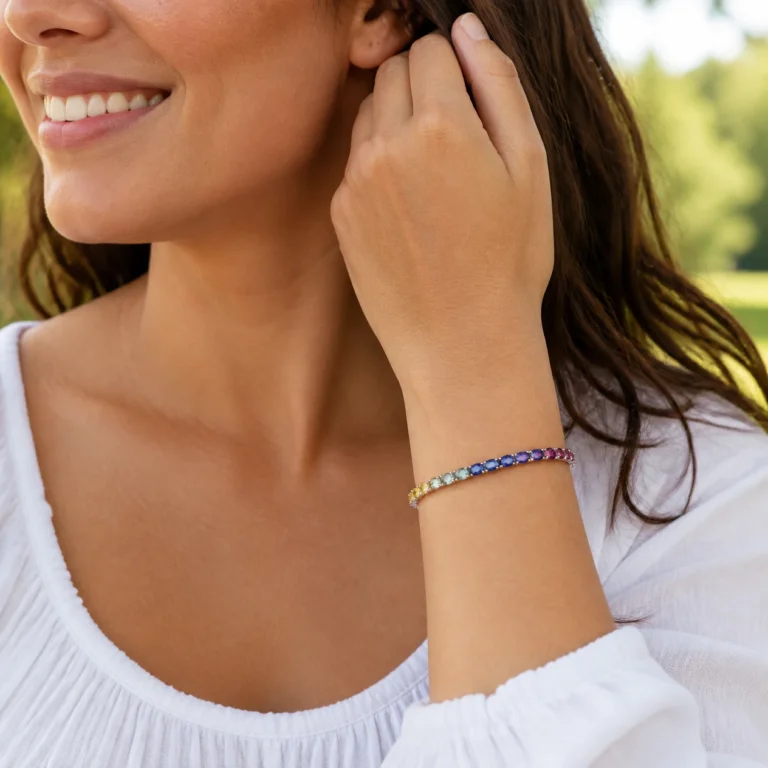
For women, a tennis bracelet is worn on its own, with a watch or with other fine bracelets; widths of 2 to 4 mm are the most popular, and coloured sapphires add a more cheerful touch. It also makes a beautiful gift for a birthday, a birth or a wedding anniversary.
Men wear tennis bracelets too, often wider and longer: from 4 to 6 mm and more, in white gold, platinum, rhodium-plated silver or steel, with white or black stones, it pairs well with a watch. Our French Riviera, for example, goes up to 23 cm long, and beyond to measure, for larger wrists.
Our tennis bracelets
 French RivieraTennis bracelet
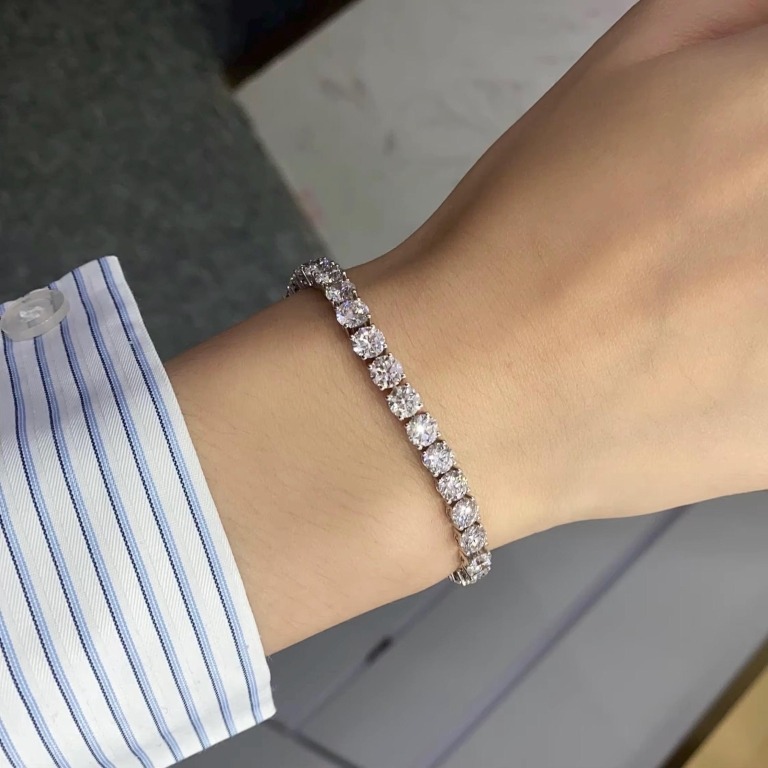 French Riviera GoldTennis bracelet
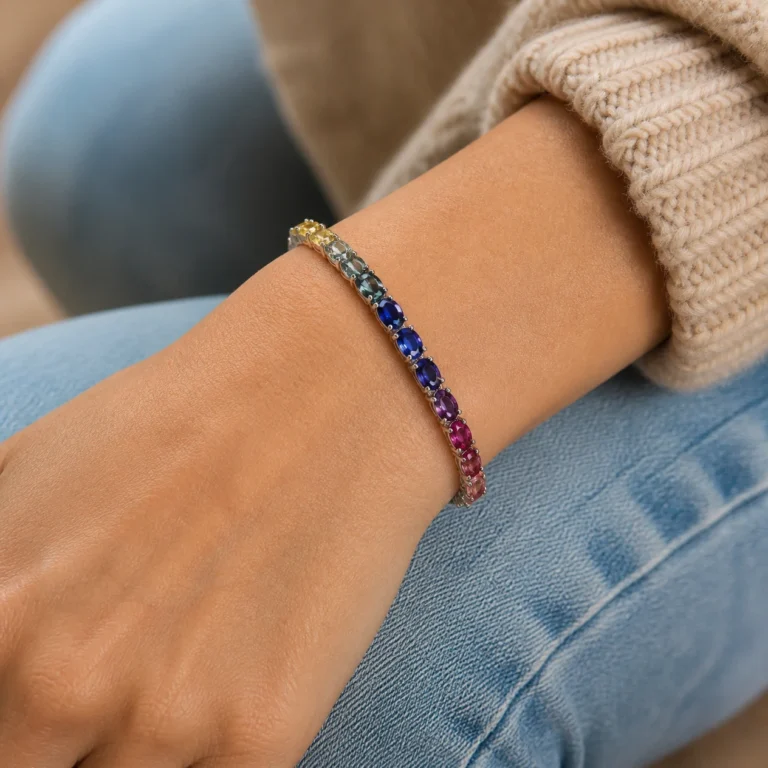 Rainbow RivieraTennis bracelet
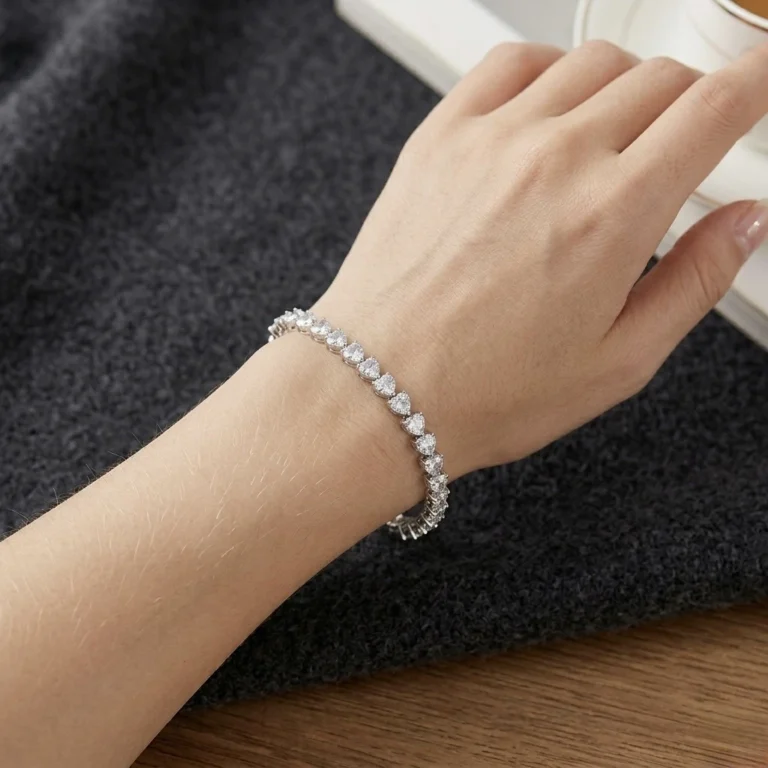 Heart CatcherBracelet
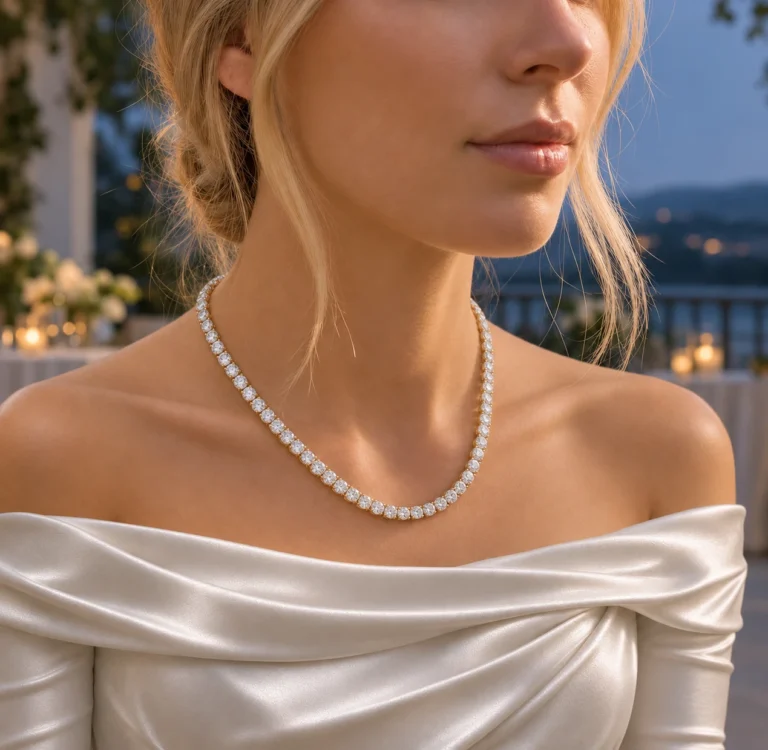 Rivière d’AzurTennis necklace
On each product page, you choose the stone, the width or weight, the length and the metal: the price of each version is shown instantly. A different length, a different stone? Write to us for a custom-made bracelet.
How to care for a tennis bracelet
Take your bracelet off before the pool, the sea, sport and bed, and avoid direct contact with perfume, creams and household products. To bring back its sparkle, a bath of warm soapy water and a soft toothbrush are all you need; then dry it with a soft cloth. Avoid abrasive products and ultrasonic cleaners on gold-plated pieces, vermeil, fragile stones such as emerald and the glued stones of fashion jewellery. Store it flat, in its box, away from humidity and from other jewellery that could scratch it. From time to time, check that the prongs hold the stones firmly and that the clasp closes cleanly: a jeweller can tighten them.
Frequently asked questions
Why is it called a tennis bracelet?
Because of Chris Evert: during a US Open match, the player had play stopped to find her diamond bracelet, which had fallen onto the court. The anecdote gave its name to this bracelet, previously called a “diamond line” or “line bracelet”.
What is the difference between a tennis bracelet and a line bracelet?
None: they are two names for the same piece, a continuous line of stones of the same size on hinged links. In French it is also called a bracelet rivière.
Can you wear a tennis bracelet every day?
Yes. With 4-prong settings, reinforced links and a clasp with a double safety catch, it is made to be worn every day. Simply take it off for sport, gardening or housework, where a knock or a snag can bend a link.
What is the best stone for a tennis bracelet?
It depends on your budget and how you will wear it: natural diamond for tradition and rarity; lab-grown diamond for a real diamond at a gentler price; moissanite for maximum sparkle on a moderate budget; sapphire for colour. All four stand up to everyday wear. Cubic zirconia suits fashion jewellery, but it scratches. Diamond or moissanite: all the differences are in our moissanite vs diamond guide.
Can you shower with a tennis bracelet?
It is best not to. Water does not damage gold or the stones, but soap and limescale cloud the stones, and pool chlorine attacks metals. If the bracelet gets wet, a rinse in clean water and a gentle dry are enough.
Does a silver tennis bracelet tarnish?
Bare silver oxidises and darkens over time, especially in contact with humid air, perfume or sweat. Rhodium-plated or gold-plated, it tarnishes far less, as long as the protective layer is not worn; our 925 silver bracelets, for example, are protected by 5 layers of rhodium or by 18k gold plating. Stored dry and cleaned gently, it keeps its sparkle for a long time.
Steel or silver tennis bracelet: which should you choose?
Stainless steel is cheaper, very tough and does not tarnish, but it is a metal with no intrinsic value, most often paired with cubic zirconia: a fashion piece. 925 silver is a precious metal, more pleasant to wear and worthy of beautiful stones such as moissanite or sapphire; rhodium-plated, it hardly tarnishes.
Is a cubic zirconia tennis bracelet a good idea?
For fashion jewellery, yes: cubic zirconia imitates diamond well at a very low price. But with a hardness of 8 to 8.5, it scratches, turns cloudy and loses its sparkle within a few years of daily wear. For a bracelet you want to keep, moissanite, sapphire or diamond last far better.
Tennis bracelet: natural or lab-grown diamond?
To the naked eye, there is no difference: same composition, same hardness, same sparkle. Natural diamond, rare and formed in the Earth, costs far more; lab-grown diamond, created in a laboratory, gets you bigger or better stones for the same budget. Neither is an investment: a diamond usually resells well below its purchase price. Everything is explained in our lab-grown diamond guide.
Tennis bracelet: 9K, 14K or 18K gold?
A tennis bracelet takes fewer knocks than a ring: 9K or 14K gold, harder and cheaper, suits it very well; 18K gold offers the richest colour and the best skin tolerance. Full comparison in our 9K, 14K or 18K gold guide.
A custom-made project?
Size, quality, setting: let’s talk.