Autumn offer: -20% on all our jewelry
Free shipping to Europe
Customer service 7 days a week | Google reviews 5/5
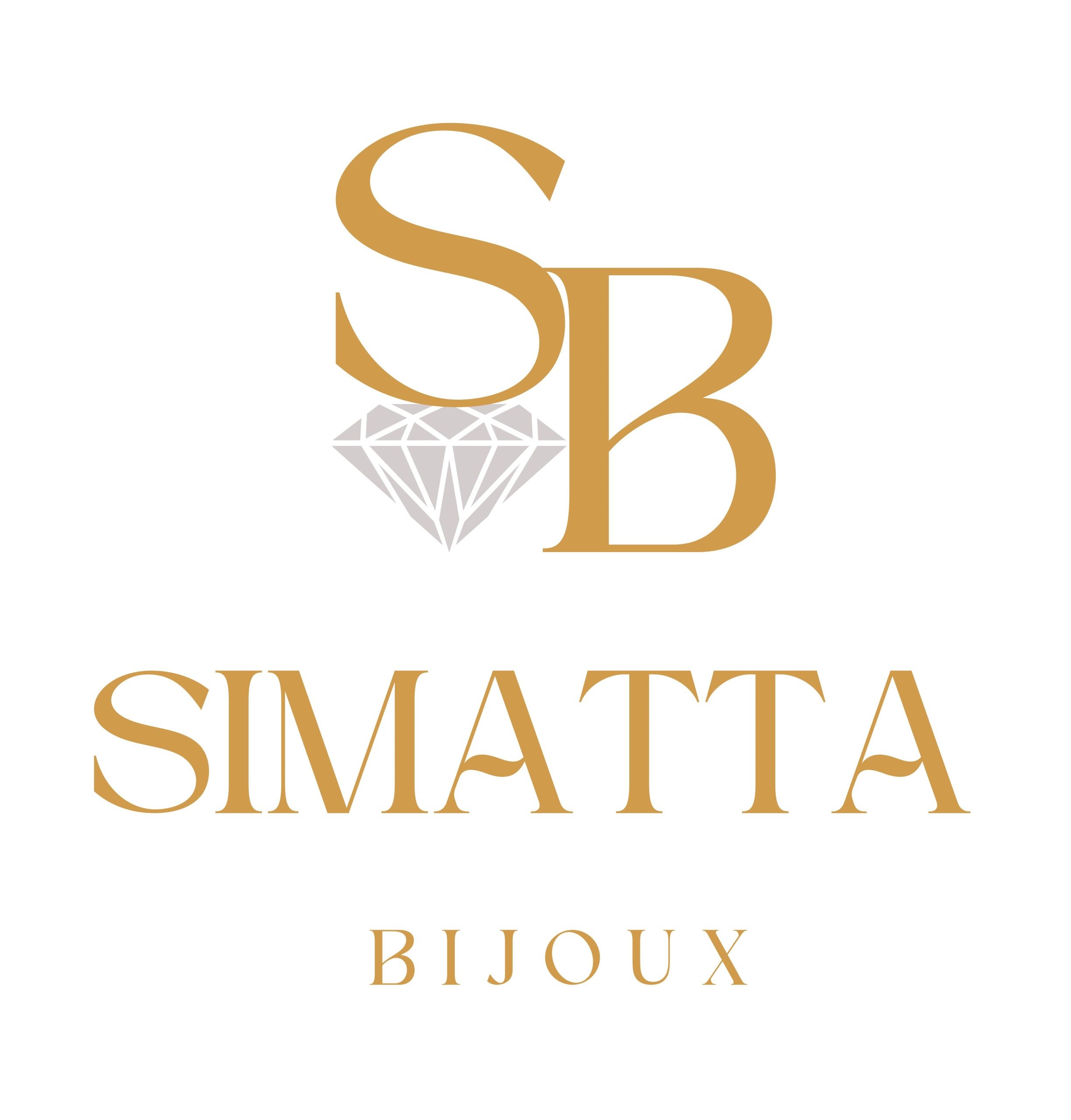
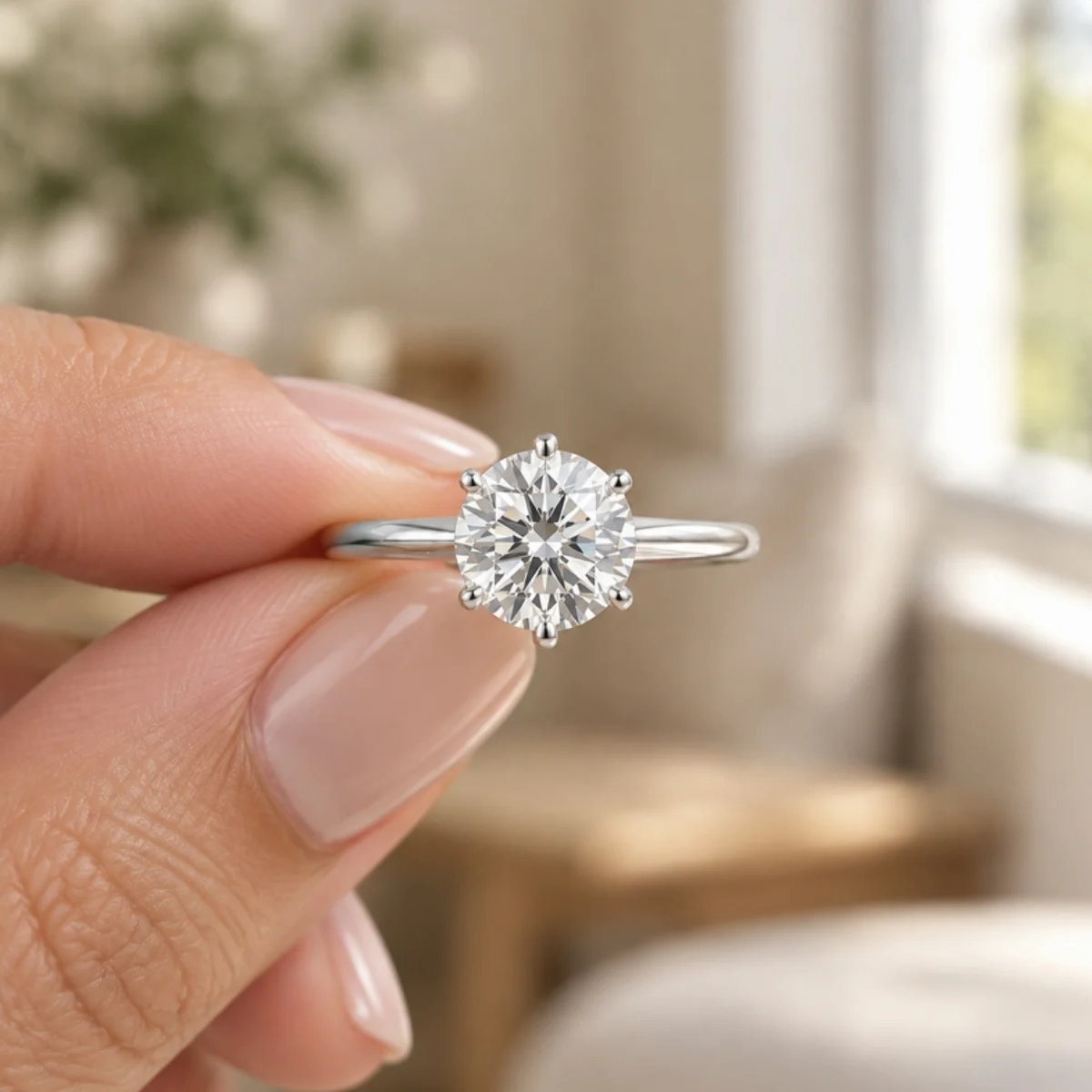
Sparkle, hardness, color, carats, price, certificate: the real differences between moissanite, lab-grown diamond and natural diamond, with a comparison table and our tips for choosing.
In short: moissanite and diamond are two different stones. Moissanite (silicon carbide) throws more colorful flashes, is slightly less hard (9.25 on the Mohs scale, versus 10) and costs much less. Diamond, whether natural or lab-grown, is pure carbon: it is the hardest gemstone, with a whiter sparkle. When worn, from a short distance, they are hard to tell apart with the naked eye. Here are the real differences, backed by figures, so you can choose with confidence.
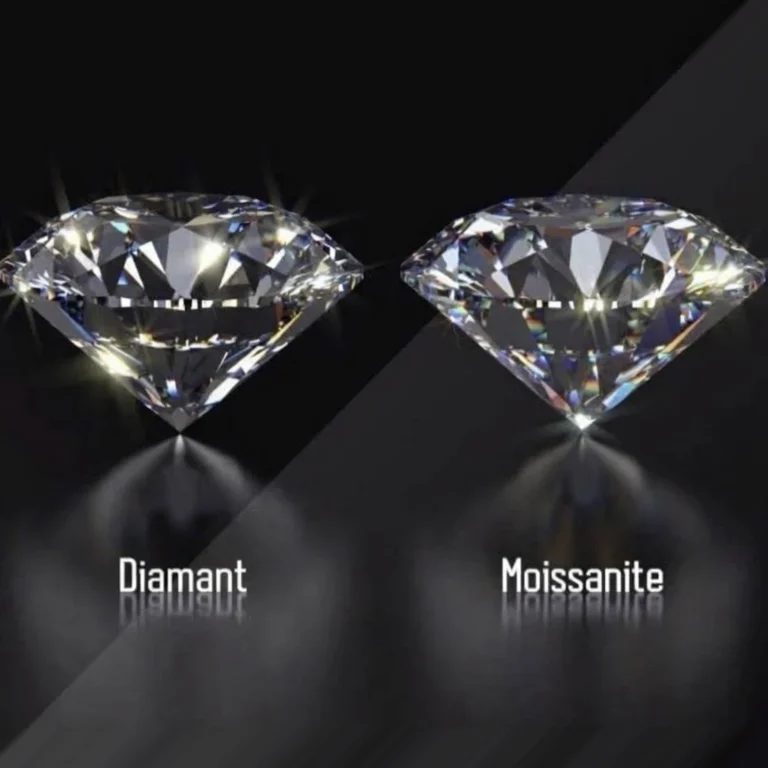
Moissanite is named after the French chemist Henri Moissan, who identified it in 1893 in fragments of the Canyon Diablo meteorite in Arizona. Natural moissanite is so rare that it could never be used for jewelry: the moissanite used in fine jewelry is therefore created in a laboratory, and has been available since the late 1990s. It has its own composition (silicon carbide), its own crystal structure and its own optical properties: it is a gemstone in its own right, not a “fake diamond”. Nor does it have anything to do with cubic zirconia, which is much softer and scratches and clouds over time (moissanite on Wikipedia).
Diamond is crystallized carbon. It can be natural (formed deep in the Earth hundreds of millions or even billions of years ago) or lab-grown, also called synthetic (HPHT or CVD processes). A lab-grown diamond has the same composition, hardness and sparkle as a natural diamond: only laboratory equipment can tell them apart, and it must always be disclosed as lab-grown when sold.
| Moissanite | Lab-grown diamond | Natural diamond | |
|---|---|---|---|
| Composition | Silicon carbide | Carbon | Carbon |
| Origin | Created in a lab | Created in a lab | Formed naturally in the Earth |
| Hardness (Mohs) | 9.25 | 10 | 10 |
| Refractive index (brilliance) | 2.65 to 2.69 | 2.42 | 2.42 |
| Dispersion (“fire”, colorful flashes) | 0.104 | 0.044 | 0.044 |
| Density | 3.21 | 3.52 | 3.52 |
| Usual color in jewelry | Colorless (D to F) | Colorless (D to H) | Highly variable |
| Certificate | GRA | IGI or GIA | GIA, IGI, HRD |
| Price | € | €€ | €€€€ |
This is the most visible difference. With a higher refractive index, moissanite returns more light than diamond. Above all, its dispersion is more than twice as high: it splits light into rainbow flashes, very visible in sunlight or under direct lighting. Diamond offers a whiter sparkle, with stronger contrast between light and dark areas.
Neither is “more beautiful”: it is a matter of taste. People who love very bright jewelry often prefer moissanite; those looking for the classic sparkle of diamond choose diamond. The difference is mostly noticeable on large stones (above about 2 carats) and up close; on a moissanite tennis bracelet or stud earrings being worn, it is very subtle.
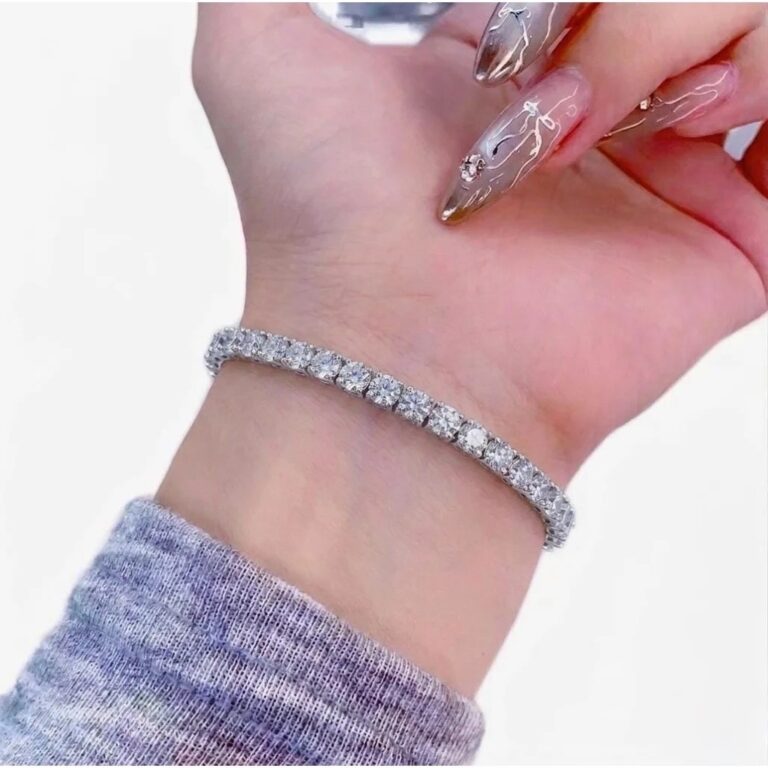
At 9.25 on the Mohs scale, moissanite is one of the hardest stones used in jewelry, just behind diamond (10). It is highly scratch-resistant and perfectly suited to jewelry worn every day, rings included. It does not dull or turn cloudy over time: a little warm soapy water and a soft brush are enough to restore its full sparkle.
Diamond remains the hardest natural material, but hard does not mean unbreakable: it has cleavage planes and can chip from a sharp knock on an edge. Moissanite, which has no distinct cleavage, is also very resistant to impact. In both cases, the quality of the setting (prongs, head) matters as much as the stone.
The first moissanites, more than ten years ago, still had a slight yellow or greenish tint. That reputation is outdated: today’s moissanites are colorless. Ours are graded D (colorless) and VVS1 (inclusions invisible, even under a loupe for an untrained eye). Our lab-grown diamonds are graded D to F, VS to VVS, meaning colorless and of very high clarity.
Moissanite is less dense than diamond: at the same size, it weighs about 10% less. That is why it is usually described in “diamond equivalent” carats, based on its diameter. To compare two stones, the most reliable measure is therefore size in millimeters: a 6.5 mm round stone corresponds to a diamond of about 1 carat, whether it is a moissanite or a diamond.
For a comparable size and quality, a moissanite costs a small fraction of the price of a natural diamond, and much less than a lab-grown diamond. The lab-grown diamond sits in between: it is far less expensive than a natural diamond of the same quality, while still being a diamond.
The easiest way to see for yourself: on our Double Éclat stud earrings and our La Solitaire ring, you choose the stone (moissanite or lab-grown diamond), the carat weight and the metal, and the price of each version is displayed instantly.
Good to know: neither moissanite nor lab-grown diamond is an investment, and a natural diamond also usually resells well below its purchase price. You choose a piece of jewelry to wear it.
Moissanite and lab-grown diamond are created in a laboratory: no mine, a known and traceable origin. That is why they are at the heart of our creations. For natural diamonds, mining conditions can be difficult to trace.
Choose moissanite if you want maximum sparkle, a generous stone size for a reasonable budget, or an everyday piece in 925 silver: French Riviera tennis bracelet, Rivière d’Azur tennis necklace, L’Absolue oval ring or L’Étreinte Céleste ring.
Choose lab-grown diamond if you want a real diamond, with its classic white sparkle, for an engagement ring or a piece in gold: French Riviera Gold tennis bracelet, La Marquisette ring or Larmes d’Aurore earrings.
Still undecided? La Solitaire, Double Éclat and the Florale earrings are available with both stones, in 925 silver or in 9k, 14k or 18k gold. And for a custom piece, write to us: we will advise you on the stone best suited to your project.
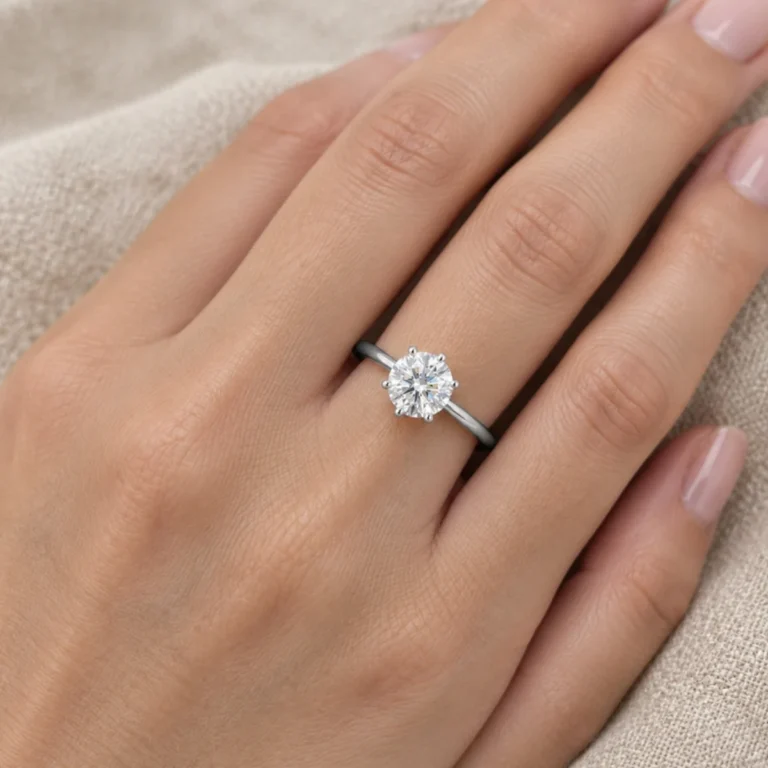
No. Moissanite is a different stone (silicon carbide), with its own properties. It looks like a diamond, but it is not one and should never be sold as such.
No. Its hardness and composition protect it: it barely scratches, does not dull and does not turn cloudy. Regular cleaning with warm soapy water is enough to remove the residue (lotion, soap) that dims any gemstone.
Yes. At 9.25 on the Mohs scale, it handles daily wear very well, including on a ring. Simply take your jewelry off for sports, gardening or housework, whatever the stone.
More and more couples choose one: it is durable, very bright and allows a larger stone for the same budget. If you prefer a diamond, a lab-grown diamond offers the same sparkle as a natural diamond at a much gentler price.
Only their origin: one is created in a laboratory, the other formed naturally in the Earth. Their composition, hardness and sparkle are identical, and only a well-equipped laboratory can tell them apart. The certificate always states whether a diamond is lab-grown. To learn more, read our guide to lab-grown diamonds.