Black Friday, scratch to reveal your discount, up to 30% off, today only5% off 2 items | 10% off 3+ itemsFree shipping to EuropeCustomer service 7 days a week | Excellent Google reviews
Guides · 11 min
Sterling Silver, Vermeil, Gold Plated, Stainless Steel: What Are the Differences?
Sterling silver, rhodium-plated silver, gold vermeil, gold plated, gold filled, stainless steel: composition, durability, sensitive skin, price, comparison with solid gold, and how to clean silver jewellery.
Simatta Bijoux · 9 November 2026
92.5%
Pure silver in sterling silver
5
Microns of gold minimum for vermeil (France)
3
Microns of gold minimum for gold plating (France)
316L
The steel of stainless jewellery
In short: sterling silver (or 925 silver) is solid silver: 92.5% pure silver and 7.5% of another metal, usually copper. Rhodium-plated silver is sterling silver covered with a thin layer of rhodium, whiter and highly resistant to tarnish. Gold vermeil is silver covered with gold: in France, the layer must be at least 5 microns of gold of at least 750‰ (18K). Gold plated means a layer of gold on another metal (brass, steel or silver); in France, at least 3 microns, otherwise it is only “gold-tone”. Stainless steel does not rust and costs little, but it is not a precious metal. Only solid gold is gold all the way through.
What is 925 sterling silver?
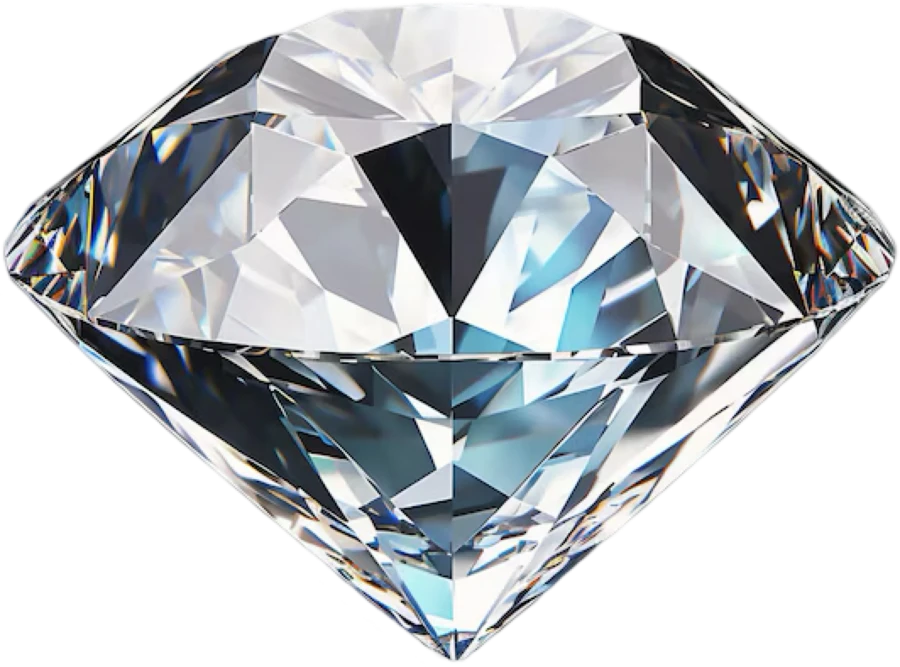
Pure silver, known as fine silver or 999, is too soft for a jewel worn every day: it scratches and bends. It is therefore alloyed with a little copper, which makes it harder without changing its colour. 925 silver contains 925 thousandths of silver, i.e. 92.5%: it is the benchmark standard of jewellery, known as sterling silver. It is called solid silver because the jewel is silver all the way through, unlike a silver-plated jewel, which is simply covered with a layer of silver.
In France, silver jewellery is stamped with a standard hallmark: the head of Minerva for silver (925 or 800 thousandths), or a crab on small items. In the UK, sterling silver pieces above 7.78 g are hallmarked, with the lion passant in England. Elsewhere you will mostly read “925”, “Sterling” or “Ster”. 800 silver, more common on antique silverware, contains less silver and tarnishes faster.
Silver has one drawback: it tarnishes. In contact with the sulphur present in the air, sweat, some cosmetics or wool, it gradually takes on a grey, then black film (silver sulphide). This is not a sign of poor quality, and a simple clean removes it. To limit tarnishing, many silver jewels receive a protective layer: rhodium or gold.
Rhodium-plated silver: why this treatment?
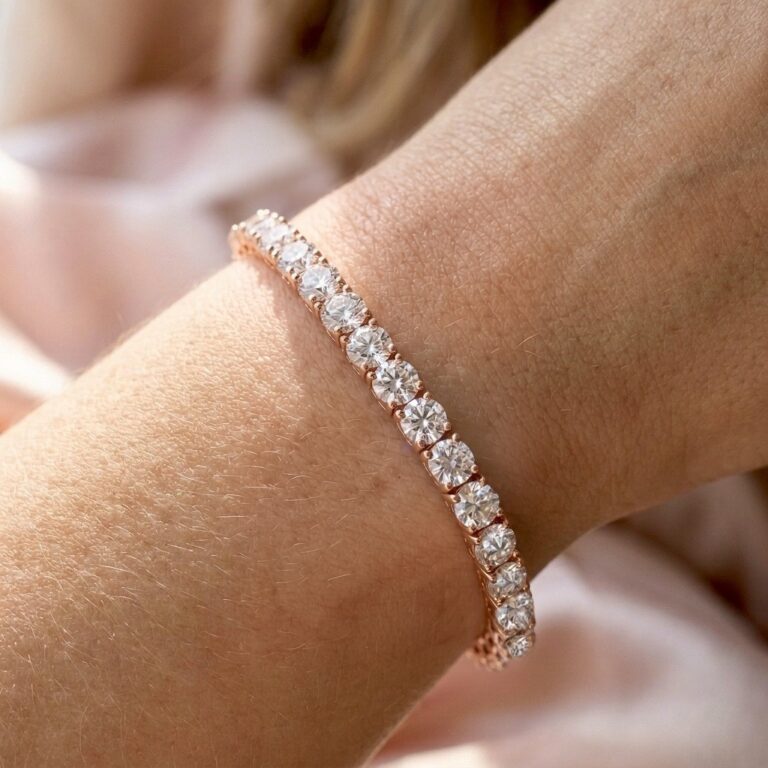
Rhodium is a metal of the platinum family, very white, very bright and very hard. Applied in a thin layer to sterling silver, it gives it a cooler, brighter white, close to white gold, and protects it: rhodium-plated silver hardly tarnishes and scratches less. This treatment also suits sensitive skin, as rhodium causes practically no allergies. Over time, especially on a ring, the layer wears where it rubs most; a new rhodium plating at a jeweller restores its shine. White gold, incidentally, is almost always rhodium plated too.
Sterling silver, vermeil, gold plated, stainless steel: the differences
These materials look alike in a photo, but they do not age in the same way. Solid gold, in the last column, serves as a point of comparison:
Composition
92.5% silver throughout
Colour
Warm white
Over time
Tarnishes, cleans easily
Water and shower
Possible, but tarnishes faster
Sensitive skin
Generally well tolerated
Value of the metal
Precious metal
Price (order of magnitude)
€€
Composition
Sterling silver + thin layer of rhodium
Colour
Cool, bright white
Over time
Hardly tarnishes; the rhodium gradually wears off
Water and shower
Good resistance
Sensitive skin
Very well tolerated
Value of the metal
Precious metal
Price (order of magnitude)
€€
Composition
Silver + at least 5 microns of gold (France)
Colour
Yellow or rose gold
Over time
The gold wears slowly, the silver shows through
Water and shower
Best avoided
Sensitive skin
Well tolerated
Value of the metal
Precious metal
Price (order of magnitude)
€€ to €€€
Composition
Brass, steel or silver + at least 3 microns of gold (France)
Colour
Yellow or rose gold
Over time
The gold wears off, more or less quickly depending on its thickness
Water and shower
Best avoided
Sensitive skin
Depends on the metal underneath
Value of the metal
Low, except on silver
Price (order of magnitude)
€ to €€
Composition
Iron, chromium and nickel (often 316L)
Colour
Steel grey, or gold-coloured by a surface treatment
Over time
Does not tarnish; the gold colour may wear off
Water and shower
Very good resistance
Sensitive skin
Well tolerated in 316L
Value of the metal
Low
Price (order of magnitude)
€
Composition
Gold all the way through (9K to 24K)
Colour
Yellow, white or rose
Over time
Does not change (9K gold may darken slightly)
Water and shower
Very good resistance
Sensitive skin
Very well tolerated in 18K
Value of the metal
High
Price (order of magnitude)
€€€€
Gold vermeil: silver covered with gold
Vermeil combines two precious metals: a solid silver core and a layer of gold. In France the name is regulated: the gold layer must be at least 5 microns thick and the gold at least 750 thousandths (18K). In the United States, the threshold is 2.5 microns of gold of at least 10K; a “vermeil” bought elsewhere may therefore be thinner. Vermeil looks like a gold jewel for a fraction of its price, and lasts much longer than thin plating. But the gold eventually wears at the points of friction, revealing the silver; the jewel can then be re-plated. Vermeil remains a silver jewel, hallmarked as such.
Gold plated: what you need to know
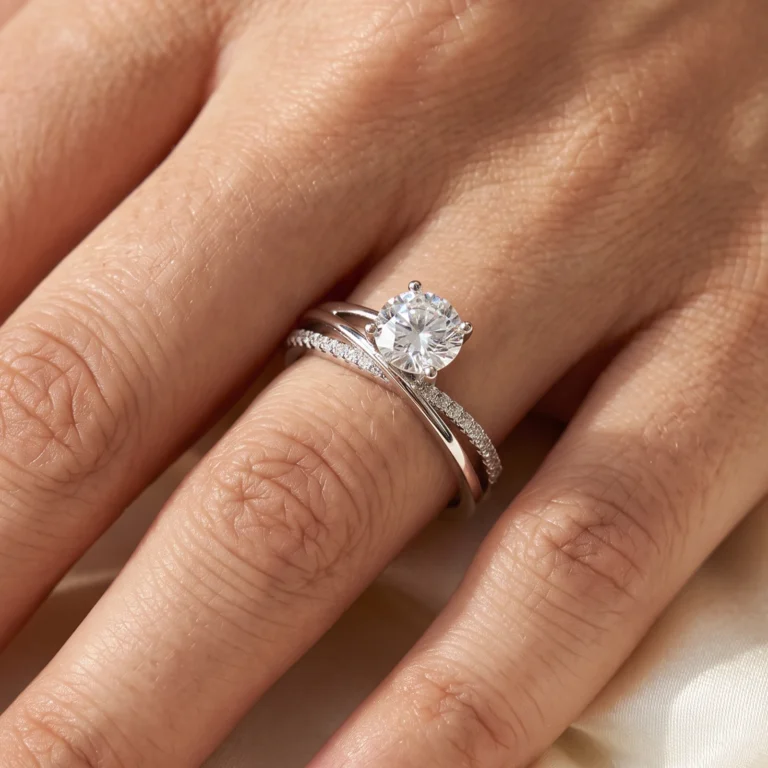
A gold plated jewel is covered with a layer of gold, usually applied by electroplating, over a base metal: brass (the most common case in fashion jewellery), steel or silver. In France, the term “plaqué or” (gold plated) requires a layer of at least 3 microns; below that, the jewel can only be sold as “doré” (gold-tone). Other countries do not always set a minimum, and a “gold plated” jewel bought abroad may carry only a few tenths of a micron. “18K gold plated” refers to the standard of the layer, not of the jewel: there is gold only on the surface.
How long does gold plating last? It depends above all on the thickness of the layer, the metal underneath and the way the jewel is worn: a few months for a very thin gold tone worn in the shower, several years for a thick, well-kept plating. A ring, under constant friction, wears faster than a necklace or earrings. The base metal matters too: on sterling silver, the jewel keeps a precious, nickel-free core and does not turn green once the layer has worn, unlike brass.
Gold filled, stainless steel, brass, titanium: the other materials
Other materials are often found, especially online:
A sheet of gold bonded under heat and pressure to a base metal, usually brass. In the United States, gold must make up at least 5% of the weight (marked “1/20 14K GF”): the layer is far thicker than plating and can last for years.
An alloy of iron, chromium and nickel, 316L steel being the most widely used in jewellery. It does not rust or tarnish, resists water and costs little. When gold-coloured by a surface treatment (often called PVD), it can wear too. It is not a precious metal: it is not easy to repair or resize.
An alloy of copper and zinc, the base of most fashion jewellery. Inexpensive, it can turn skin green and may contain nickel once the gold layer has worn off.
Light, very strong and hypoallergenic, it is mainly used for piercings and modern wedding bands.
Whiter and softer than sterling silver, it is reserved for some handcrafted pieces and for bullion.
And solid gold?
Between silver and solid gold, the difference is not only the price. A 9K, 14K or 18K gold jewel is gold all the way through: it does not wear on the surface, does not tarnish (or very little in 9K) and keeps a resale value linked to the price of gold. A sterling silver jewel costs much less, even gold plated, but needs a little care, and its gold or rhodium plating will one day have to be redone. For an engagement ring worn for a lifetime, solid gold or platinum remain the most durable choices; for everyday jewellery, larger pieces or a tighter budget, sterling silver is an excellent choice. The differences between 9K, 14K and 18K gold are detailed in our guide 9K, 14K or 18K gold.
Which metal to choose for your jewel?
It all depends on how you wear it, your skin and your budget:
J
Jewel worn every day
Rhodium-plated silver, solid gold or stainless steel stand up best to daily life. Gold plating is better suited to pieces that rub little (necklaces, earrings).
S
Sensitive skin
Sterling silver, rhodium-plated silver, 18K gold, titanium or platinum. Avoid brass and fashion jewellery of unknown composition.
A
Affordable gold-coloured jewel
Vermeil or gold plated sterling silver offer a precious metal core; gold plating on brass costs less but ages faster.
J
Jewel to keep or pass on
Solid gold or platinum, which do not wear on the surface and can be repaired endlessly.
S
Sport, sea and swimming pool
Stainless steel or titanium. Take off silver, vermeil and gold plated pieces.
How to clean silver jewellery?
A tarnished silver jewel gets its shine back in a few minutes, provided the method suits its finish:
Rub it with a silver polishing cloth, impregnated with a cleaning product. For a heavily blackened jewel without fragile stones, a bath of hot water with a spoonful of baking soda and a sheet of aluminium foil at the bottom of the bowl removes the black film. Rinse and dry straight away.
Warm soapy water, a very soft brush, a rinse and a dry with a soft cloth are enough. No polishing cloth, baking soda or silver cleaner: they would wear away the surface layer.
A soft toothbrush and soapy water clean underneath the stones, where dust dulls their sparkle. Pearls, opal, turquoise and emerald need more gentleness: a damp cloth only.
Toothpaste (too abrasive, it scratches silver), bleach, chlorine and household cleaners.
To make it tarnish less, store each jewel separately, in a closed pouch or a zip-lock bag, away from moisture. Put it on after perfume and cream, and take it off for the shower, sport and housework. Wearing your jewel often is also the best care: gentle friction against the skin slows tarnishing.
Our sterling silver jewellery
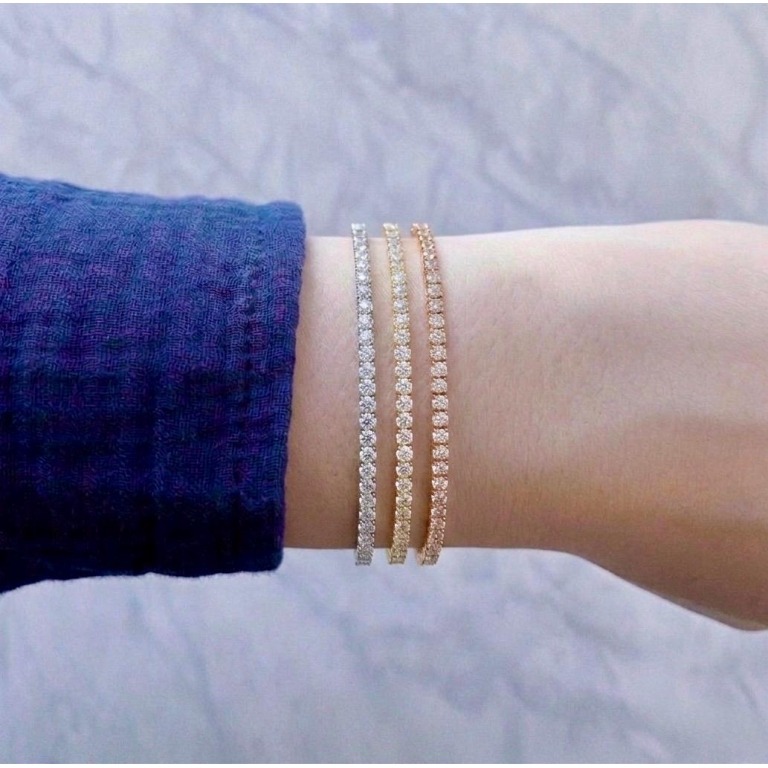
French RivieraTennis bracelet Rivière d’AzurTennis necklace
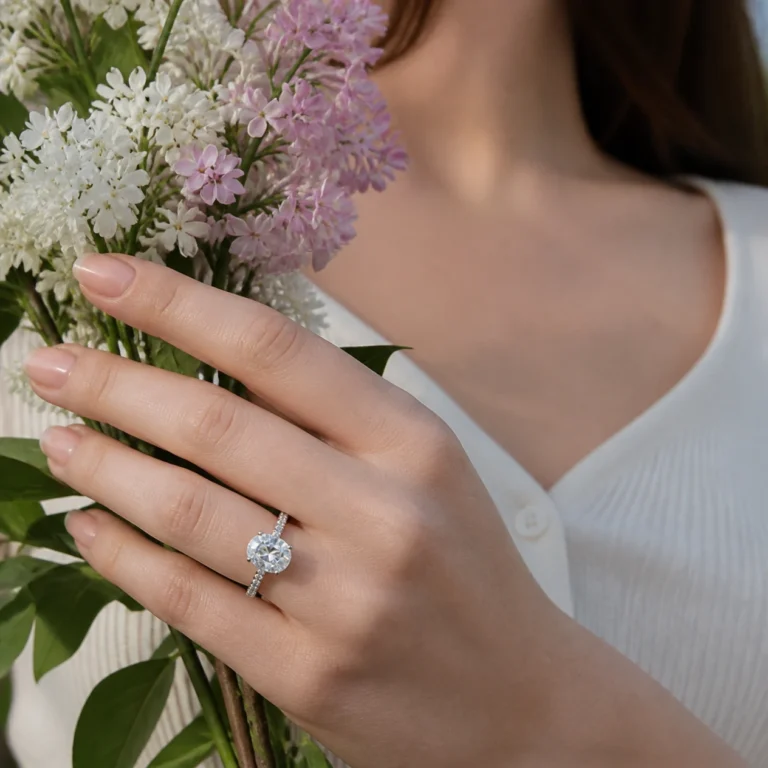 L’AbsolueRingL’Étreinte CélesteRing
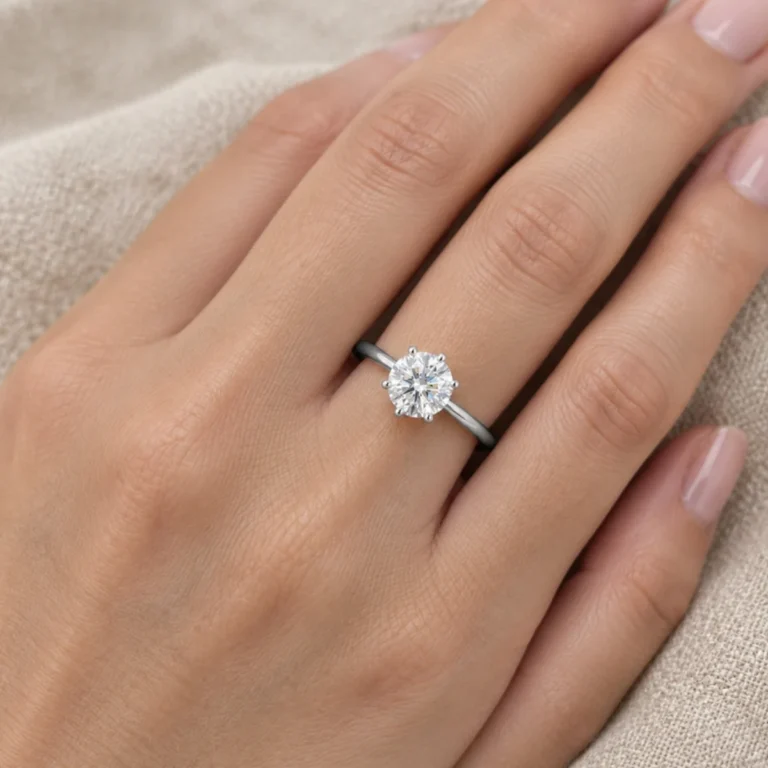
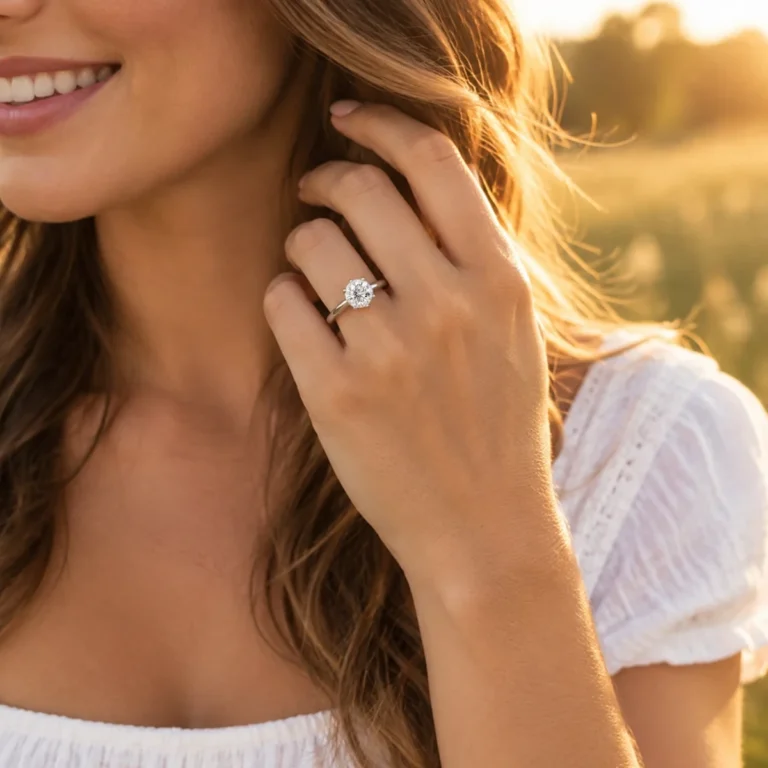 La SolitaireRing
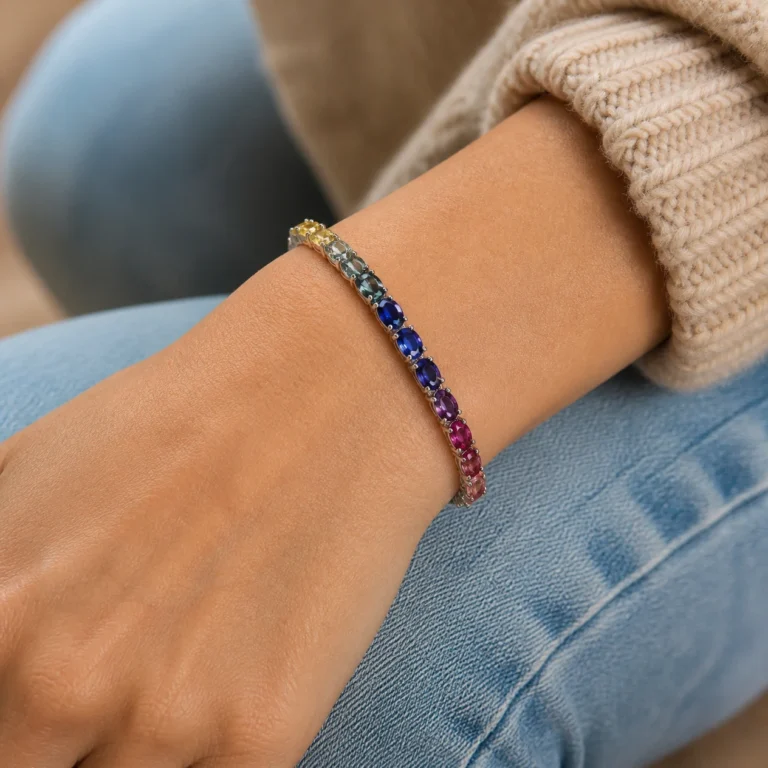 Rainbow RivieraTennis bracelet
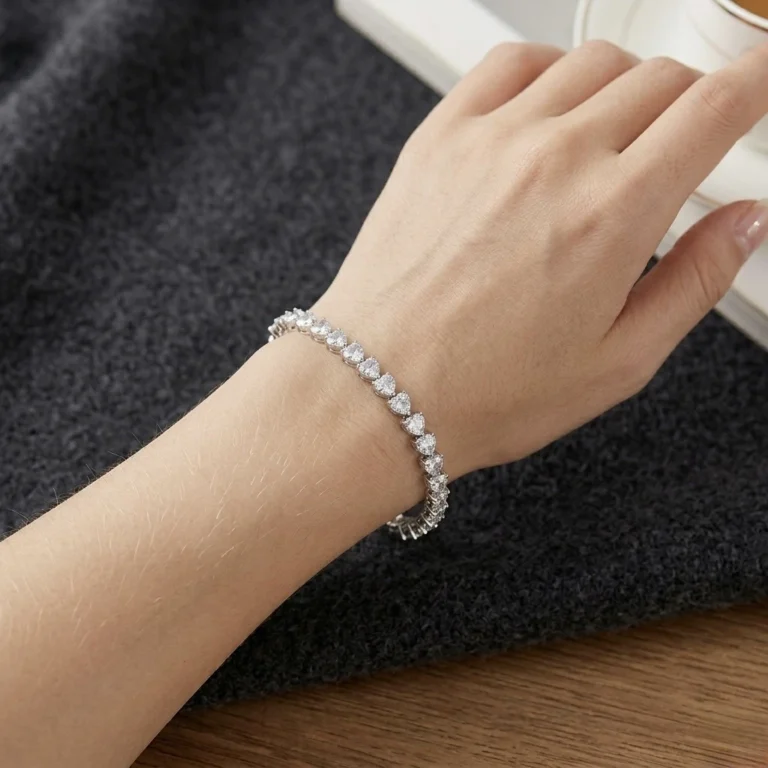 Heart CatcherBracelet
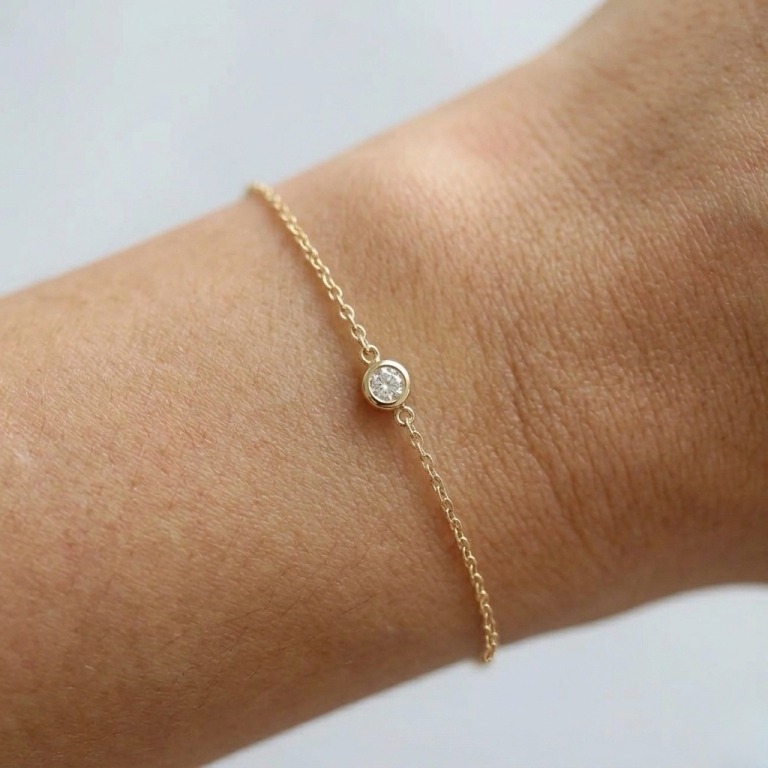 L’Envolée SolitaireBracelet
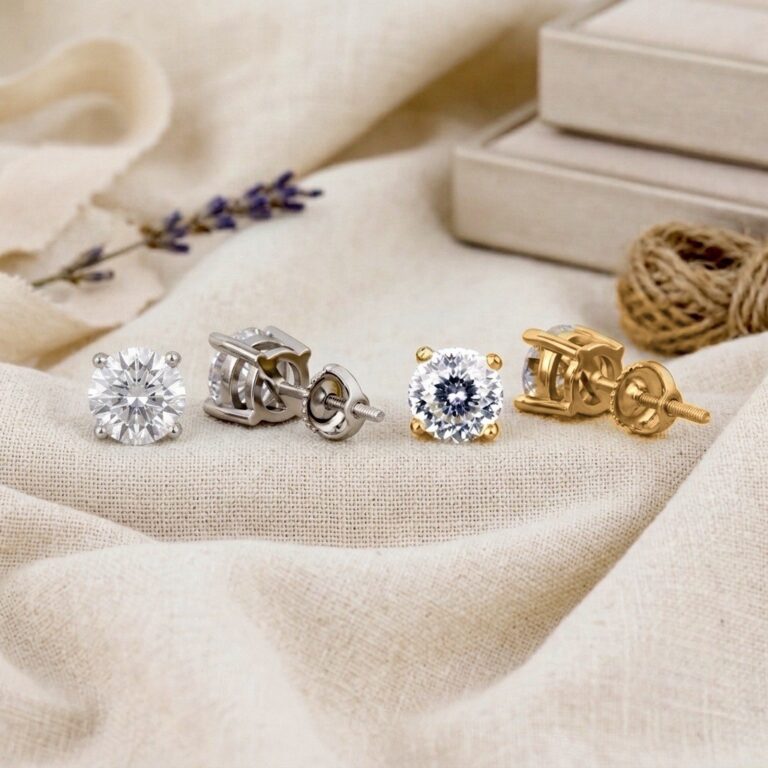 Double ÉclatStud earrings
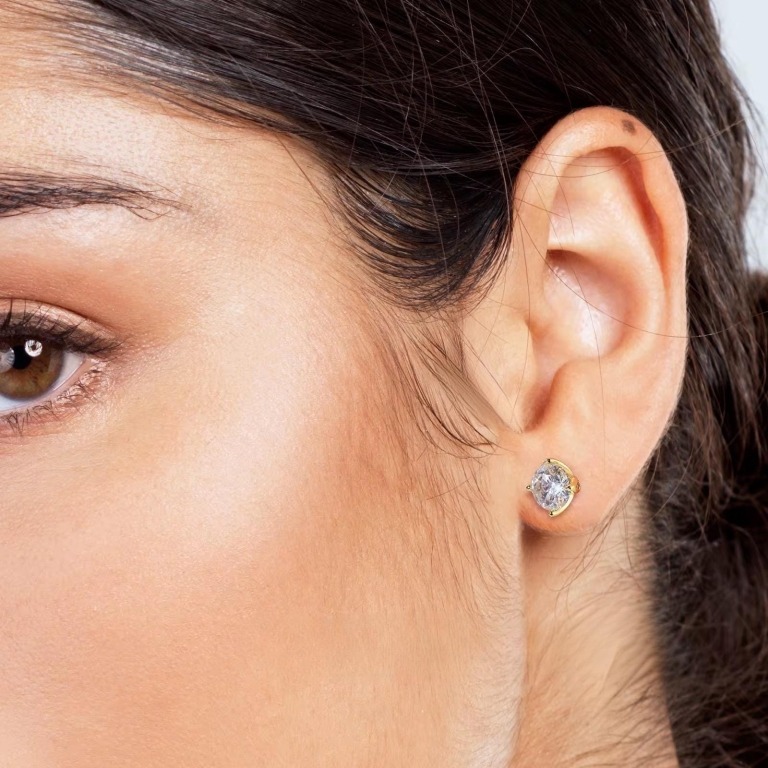 FloraleEarrings
Another jewel, another finish? Write to us for a custom-made creation.
Frequently asked questions
Is 925 silver real silver?
Yes: it is solid silver, containing 92.5% pure silver. The remaining 7.5%, usually copper, makes it hard enough to wear. It is the standard used for the vast majority of silver jewellery, all over the world.
Does sterling silver tarnish?
It can tarnish, then blacken, in contact with sulphur in the air, sweat or cosmetics. This film comes off with a silver polishing cloth. Rhodium-plated or gold plated silver tarnishes much less easily, as long as its surface layer is intact.
Can you shower with sterling silver jewellery?
Water alone does not damage it, but soap, limescale and above all swimming pool chlorine speed up tarnishing and wear gold plating. It is best to take off silver, vermeil or gold plated jewellery for the shower, or to rinse and dry it straight afterwards.
How long does gold plating last?
From a few months to several years: it all depends on the thickness of the layer, the metal underneath and the use. A necklace or earrings wear less quickly than a ring or bracelet worn every day. Avoiding water, perfume and friction makes it last much longer.
Gold vermeil or gold plated: which to choose?
Vermeil always has a solid silver core and, in France, a gold layer of at least 5 microns: it lasts longer and keeps its value. Gold plating can cover a non-precious metal and the layer can be thinner. At a similar price, vermeil or gold plated sterling silver are the most durable.
Stainless steel or sterling silver: which is better?
Steel does not tarnish, resists water and costs less; silver is a precious metal, brighter, which can be repaired, resized and cleaned easily. Steel suits sports and beach jewellery, silver finer jewellery or pieces set with stones.
How can you tell if a jewel is silver?
Look for the hallmark: head of Minerva or crab in France, lion passant in England, “925” or “Sterling” elsewhere. Silver is not attracted by a magnet, but many imitations are not either. If in doubt, a jeweller can test the metal.
Does sterling silver cause allergies?
Rarely: sterling silver is alloyed with copper, and jewellery allergies mostly come from nickel. Rhodium-plated silver is even better tolerated. For very reactive skin, also consider 18K gold, titanium or platinum, and avoid brass.
What is the difference between solid silver and silver-plated?
A solid silver jewel is silver all the way through; a silver-plated jewel is another metal (often brass) covered with a thin layer of silver, which wears off over time. Only solid silver carries a standard hallmark.
A custom-made project?
Size, quality, setting: let’s talk.