Black Friday, scratch to reveal your discount, up to 30% off, today only5% off 2 items | 10% off 3+ itemsFree shipping to EuropeCustomer service 7 days a week | Excellent Google reviews
Guides · 12 min
9K, 14K or 18K Gold; White, Yellow or Rose Gold: Which Gold to Choose?
9K, 14K or 18K gold: gold content, hallmarks, colour, strength, sensitive skin and price; yellow, white or rose gold; white gold or platinum; solid or plated gold.
Simatta Bijoux · 4 November 2026
24
Karats: pure gold
75%
Gold in 18K gold
58.5%
In 14K gold
37.5%
In 9K gold
In short
The karat number gives the share of pure gold in the metal, out of 24. 18K gold contains 75% gold (stamped 750), 14K gold 58.5% (585) and 9K gold 37.5% (375); the rest is an alloy of silver, copper or palladium. All three are solid gold. 18K has the richest colour and is the gentlest on skin; 14K resists scratches better; 9K costs the least. The colour comes from the alloy: yellow gold mixes silver and copper, rose gold uses more copper, white gold uses palladium or nickel and is then plated with rhodium. Platinum, naturally white, is heavier and more expensive.
9K, 14K, 18K or 24K gold: what does the karat mean?
Pure gold is too soft for jewellery: it scratches, bends and cannot hold stones. It is therefore mixed with other metals to form an alloy. The karat (written “K”, “kt” or, in the UK, “ct”) measures the share of pure gold in that alloy, out of 24 parts: 24K gold is pure gold, 18K gold contains 18 parts of gold out of 24, i.e. 75%. In Europe it is more often written in thousandths: 750 for 18K, 585 for 14K, 375 for 9K. That is the number you read engraved inside a ring. The United States also uses 10K (417, 41.7% gold), the minimum to be sold as gold there.
Do not confuse it with the carat of gemstones, a unit of weight (1 carat = 0.2 g): an “18K gold ring with a 1-carat diamond” uses the same word in two different senses. Habits vary from country to country: 18K dominates in France, Italy and Spain; 14K and 9K are common in Germany, the UK and the United States (which also uses 10K); 22K and 24K, very yellow and very soft, are mostly worn in India, Asia and the Middle East.
9K, 14K or 18K gold: the differences
All hallmarked gold is solid gold: the difference lies in the amount of gold and in the metals that accompany it. The more alloy, the harder and cheaper the metal, but the paler its colour. Platinum, often compared with white gold, is in the last column:
Precious metal
37.5% gold (375)
French hallmark
Clover
Colour of yellow gold
Pale yellow
Scratch resistance
Very good
Tarnishing
May darken slightly over time
Sensitive skin
Most alloy: avoid if allergic
Weight (same jewel)
Lightest (≈ −27%)
Price (order of magnitude)
€
Precious metal
58.5% gold (585)
French hallmark
Scallop shell
Colour of yellow gold
Soft yellow
Scratch resistance
Very good
Tarnishing
Very rare
Sensitive skin
Suits most people
Weight (same jewel)
Light (≈ −15%)
Price (order of magnitude)
€€
Precious metal
75% gold (750)
French hallmark
Eagle’s head
Colour of yellow gold
Warm, luminous yellow
Scratch resistance
Good
Tarnishing
None
Sensitive skin
Very well tolerated
Weight (same jewel)
Reference
Price (order of magnitude)
€€€
Precious metal
99.9% gold (999)
French hallmark
Rare in jewellery
Colour of yellow gold
Intense yellow
Scratch resistance
Poor: very soft
Tarnishing
None
Sensitive skin
Very well tolerated
Weight (same jewel)
Heavier (≈ +25%)
Price (order of magnitude)
€€€€
Precious metal
95% platinum (950)
French hallmark
Dog’s head
Colour of yellow gold
Natural greyish white
Scratch resistance
Good: develops a patina without losing metal
Tarnishing
None
Sensitive skin
Hypoallergenic
Weight (same jewel)
Heaviest (≈ +35%)
Price (order of magnitude)
€€€€
18K gold is the benchmark of fine jewellery in France: three quarters gold, a warm, deep colour, no tarnishing and very good skin tolerance. Slightly softer, it can mark sooner on a ring worn every day, but it polishes up very well. 14K gold is an excellent compromise: harder, so more resistant to knocks and scratches, almost as beautiful and noticeably cheaper; it is the best-selling gold for engagement rings in the United States. 9K gold is the most affordable and the hardest; its colour is paler and it can darken slightly over the years, which a clean removes. It is genuine solid gold, ideal for a first gold jewel or a delicate piece worn every day.
For the same design, the karat also changes the weight: 18K gold being denser, the same ring weighs about 15% less in 14K and just over a quarter less in 9K. The price therefore drops twice: less gold in the alloy, and less metal in the jewel.
Yellow, white or rose gold: where do the colours come from?
Pure gold is yellow. Its colour depends on the metals added to it, and the lower the karat, the more the alloy affects the shade. The three main colours:
The traditional colour
Gold alloyed with silver and copper in similar proportions. Warm and luminous, it does not change over time and warms up white and coloured stones alike. It is the gold that needs the least upkeep.
Finished with rhodium
Gold alloyed with palladium or nickel, which give it a light grey, slightly warm shade. It is almost always plated with a thin layer of rhodium, a very white and shiny metal. With wear, this rhodium gradually fades (often within one to three years on a ring worn daily), and fresh rhodium plating at a jeweller restores its whiteness.
Or red gold
More copper in the alloy, hence its pinkish shade, more or less deep. Soft and romantic, it flatters most skin tones and does not tarnish; in 9K, its colour is often pinker than in 18K.
Green gold, black gold…
Green gold, alloyed with a lot of silver, is rare; black gold is most often gold with a surface treatment (black rhodium), which also wears off.
In Europe, the amount of nickel a jewel may release on contact with the skin is limited by regulation; palladium white gold contains none at all. If you have a known nickel allergy, ask for palladium white gold, 18K yellow gold or platinum.
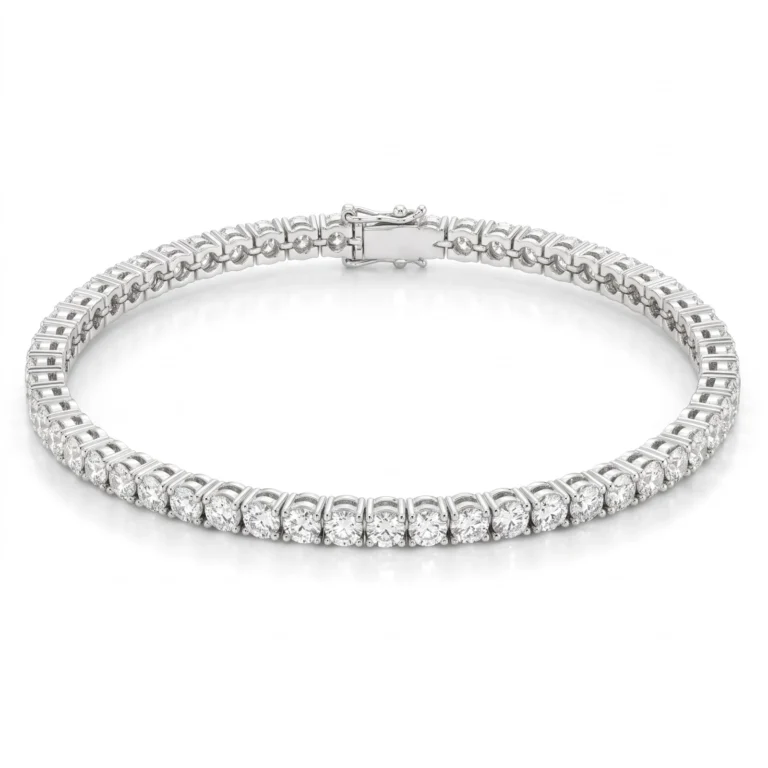
White gold or platinum: which to choose?
Both are white, but not in the same way. White gold owes its brilliant whiteness to rhodium, which needs renewing from time to time; it is lighter and much cheaper. Platinum, used in jewellery at 95% purity, is white all the way through: it never yellows, causes no allergies and holds stones very securely. On the other hand, it is heavier (about a third more than 18K gold), harder to work and therefore more expensive; over time it takes on a fine matt patina that some people love and that polishing removes. For an engagement ring worn for life, both are excellent choices: white gold for budget and brilliance, platinum for peace of mind. Palladium, from the same family as platinum, is rarer in jewellery.
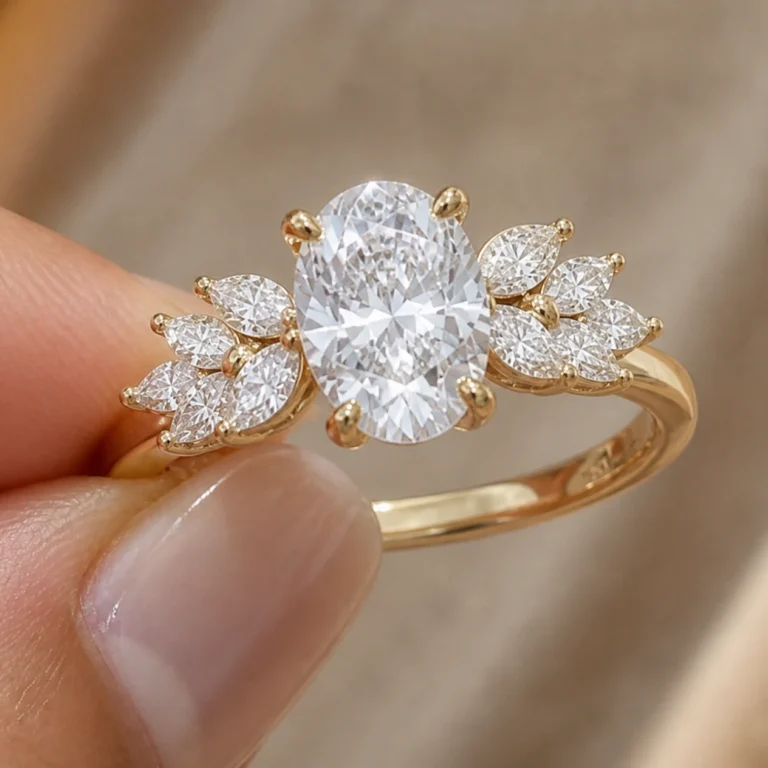
Which gold to choose for your jewel and your skin?
There is no wrong choice, only different priorities:
E
Engagement ring or wedding band
A ring takes knocks every day. 18K gold for colour and tradition, 14K for resistance, platinum for durability. Choose the same metal for the engagement ring and the wedding band.
B
Bracelet, necklace, earrings
Less exposed to knocks, they wear very well in 9K or 14K. For earrings or reactive skin, prefer 18K.
S
Sensitive skin
Go for 18K gold, palladium white gold or platinum, and avoid nickel-rich alloys.
T
Tight budget
9K gold gives you a real solid gold jewel for a price close to some plated pieces, and it will last far longer.
S
Skin tone and style
Yellow gold is often said to suit olive skin and white gold fair skin, but the simplest approach is to match the new jewel to those you already wear, and to the colour of the stone.
Solid gold, gold plated, vermeil: don’t mix them up
Only solid gold (9K, 14K, 18K or more) is gold all the way through. Other “golden” jewellery only has gold on the surface:
G
Gold plated
A layer of gold a few microns thick, deposited on brass, steel or silver. Pretty and affordable, it eventually wears off, especially on a ring.
V
Vermeil
Solid sterling silver covered with a thicker layer of gold. More durable than plating on brass, it remains a silver jewel.
G
Gold filled
A sheet of gold bonded to a base metal, thicker than plating.
G
Gold-tone
A simple varnish or a minute layer, reserved for fashion jewellery.
The markings “GP” (gold plated), “HGE” or “GF” (gold filled) indicate plated or filled jewellery, not solid gold. The differences between sterling silver, vermeil and gold plating are detailed in our guide sterling silver, vermeil, gold plated.
How to recognise gold: hallmarks and stamps
In France, every solid gold jewel offered for sale in principle bears a fineness hallmark applied under state control: a clover for 9K gold, a scallop shell for 14K, an eagle’s head for 18K, alongside the maker’s or importer’s mark in a lozenge. In the United Kingdom, gold items over 1 gram must be hallmarked by an assay office, with the fineness (375, 585, 750) and the office’s mark. Elsewhere, you mostly read engraved numbers: 375, 585, 750 or 9K, 14K, 18K. All the French symbols are explained on our Hallmarks and guarantees page.
A magnet test proves nothing (gold is not magnetic, but neither are many imitations); if in doubt, a jeweller can test the metal with a touchstone or an analyser.
What makes the price of a gold jewel
The price of a gold jewel comes down to four things: the weight of metal, its karat (the share of pure gold), the gold price, which changes every day, and the craftsmanship (design, making, finishing), plus the stones. Going from 18K to 9K lowers the price considerably, since there is half as much gold in the alloy and less metal in the jewel. When resold, a gold jewel is mainly bought back for its weight of pure gold: craftsmanship and stones are rarely paid at their value.
Our gold jewellery
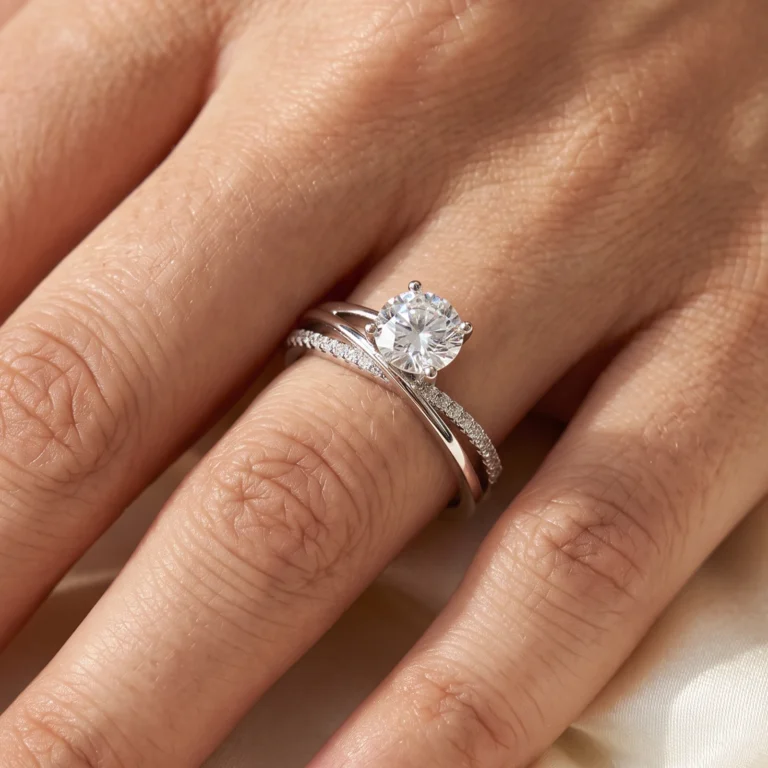
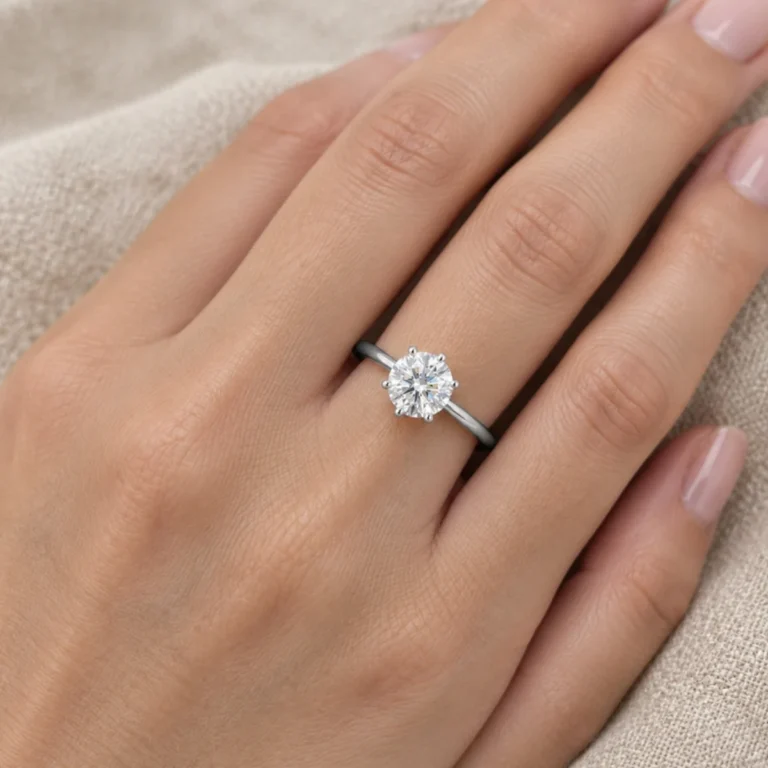
 La SolitaireRingLa MarquisetteRing
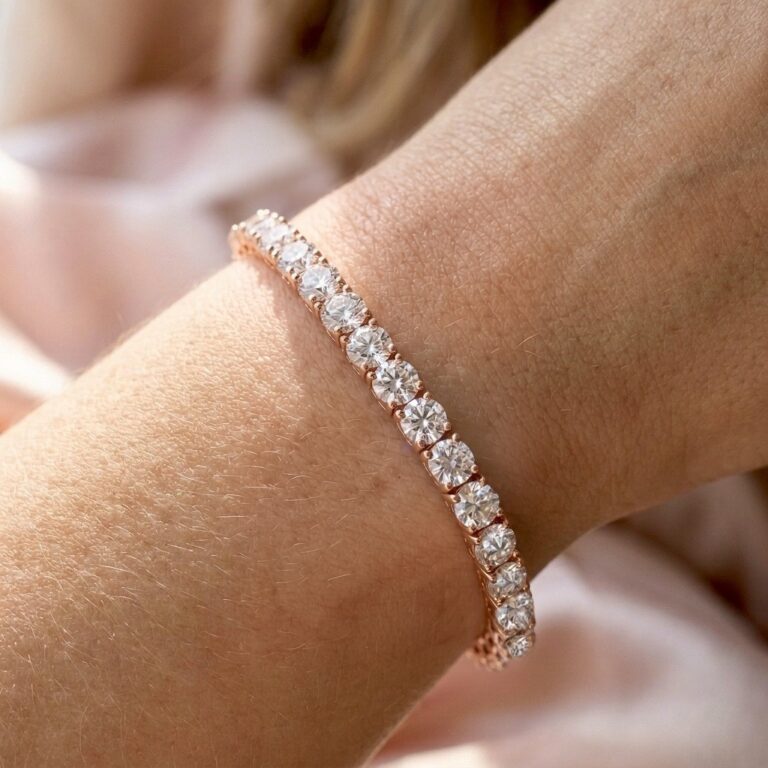
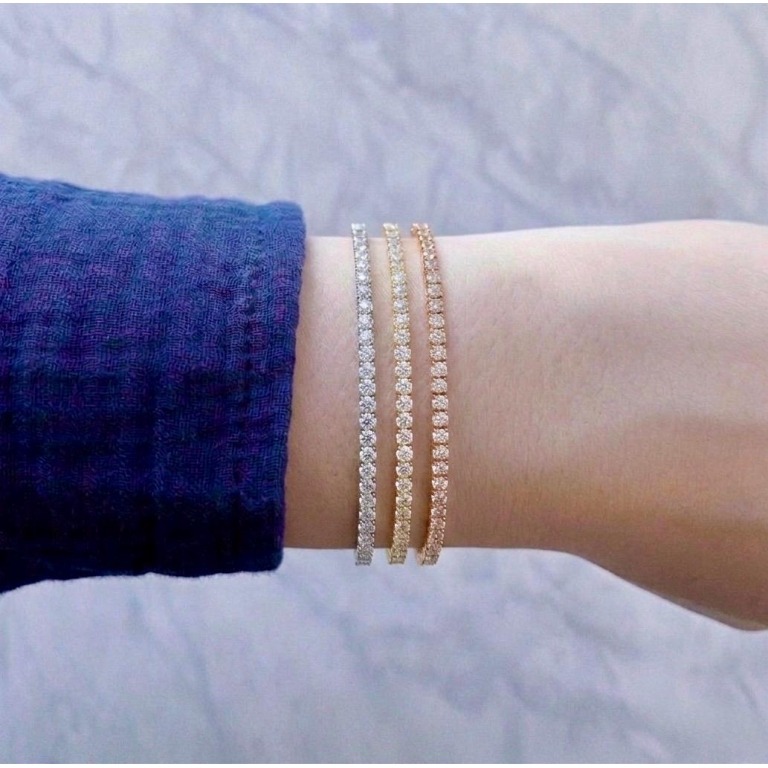
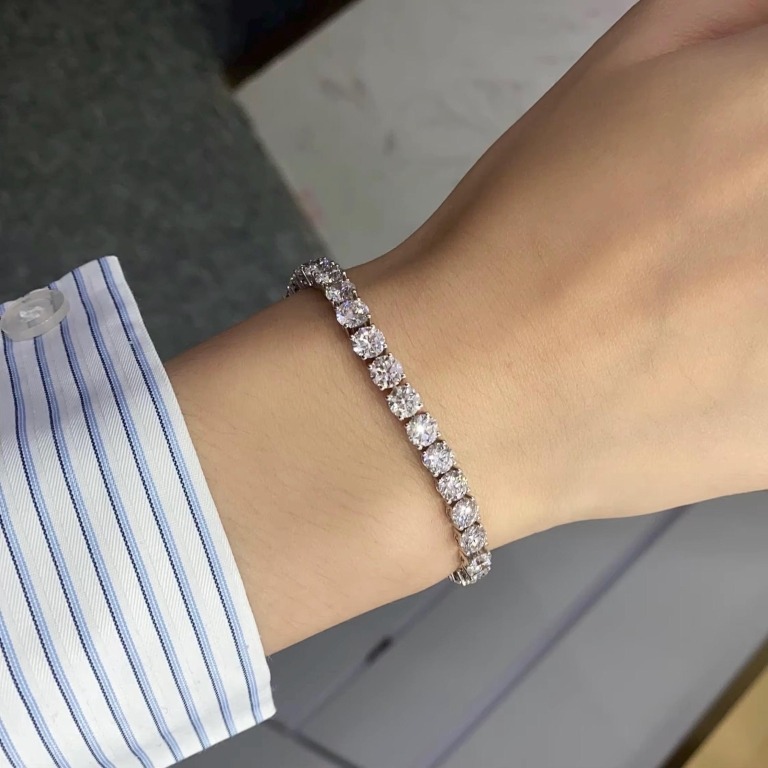 French Riviera GoldTennis bracelet
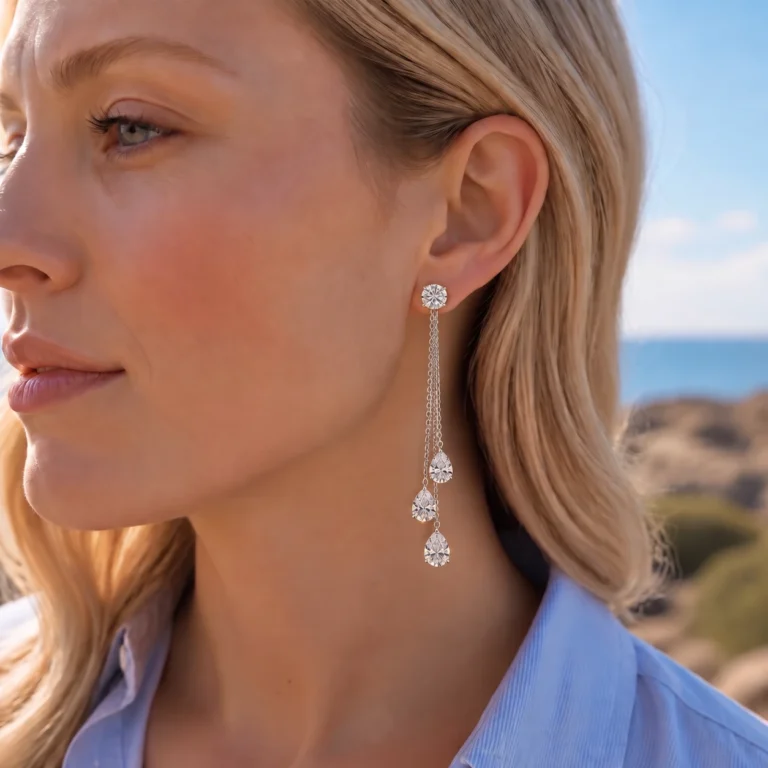 Larmes d’AuroreEarrings
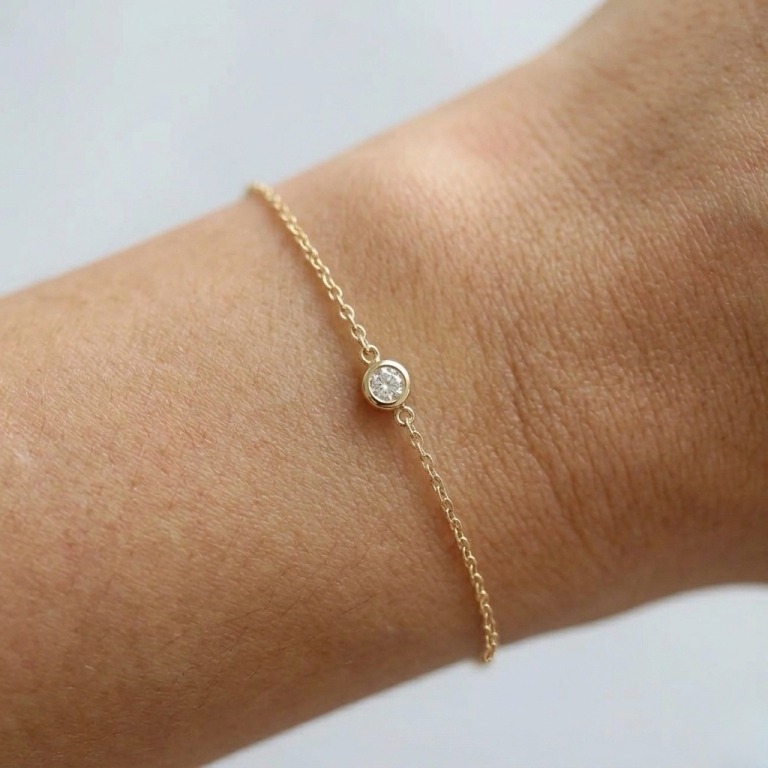 L’Envolée SolitaireBracelet
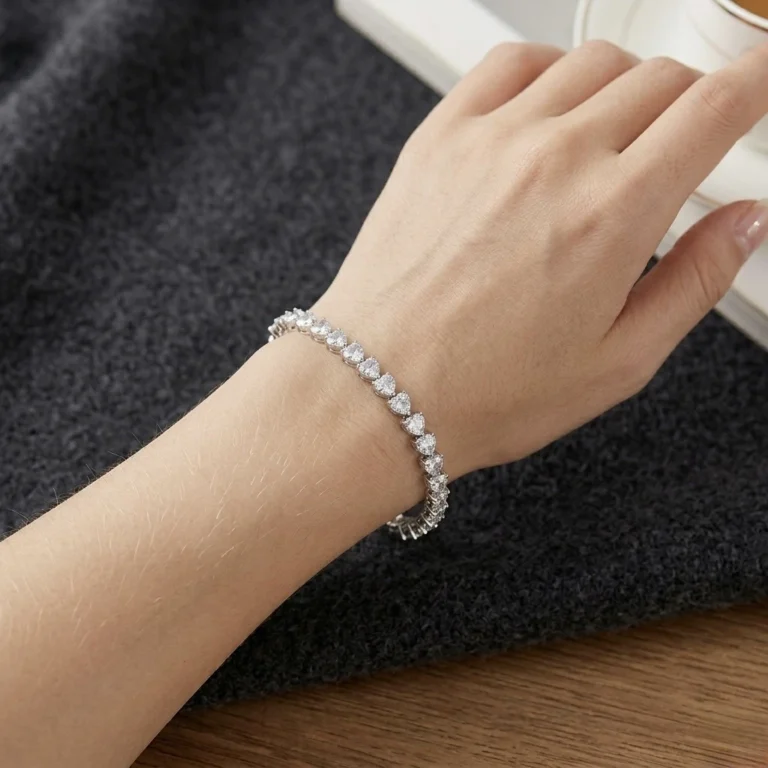 Heart CatcherBracelet
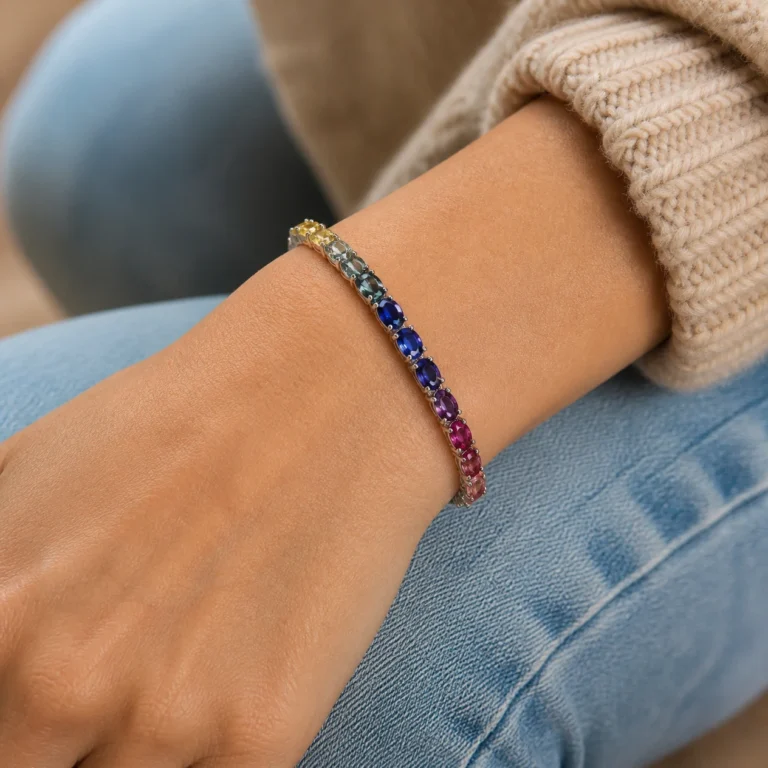 Rainbow RivieraTennis bracelet
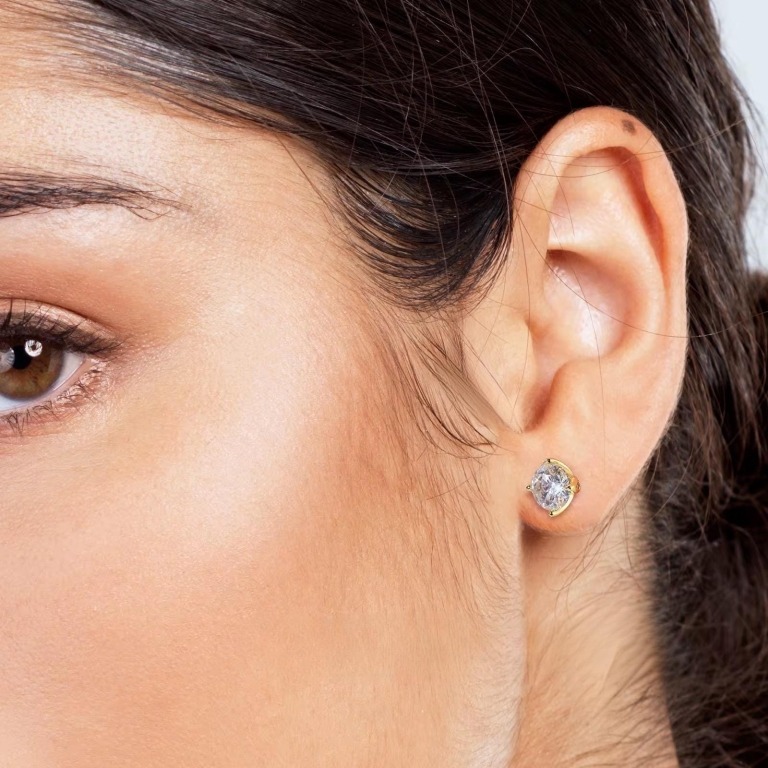
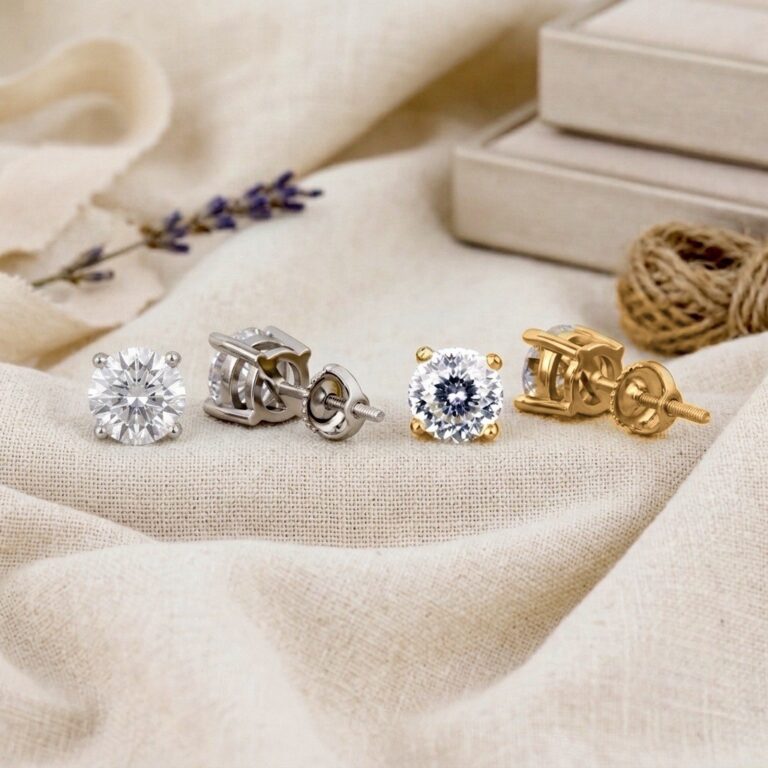 Double ÉclatStud earrings
 FloraleEarrings
All are available in 9K, 14K and 18K white, yellow or rose gold: on each product page, the price of each karat appears instantly. Another jewel, another metal such as platinum? Write to us for a custom-made creation.
How to care for gold jewellery
Solid gold fears neither water nor air, but it scratches against hard objects and dulls under creams and soap. Clean it in warm soapy water with a soft brush, rinse and dry with a soft cloth; a jeweller’s cloth revives the polish. Take your jewellery off before the swimming pool (chlorine attacks alloys, especially lower karats), sport and housework, and store pieces separately so they do not scratch one another. For white gold, plan a rhodium plating when a yellow tint appears; for yellow or rose gold, a polish at a jeweller removes small scratches.
Frequently asked questions
Is 9K gold real gold?
Yes: it is solid gold, containing 37.5% pure gold, and is hallmarked with a clover in France. It contains less gold than 14K or 18K, which makes it harder, lighter and cheaper, with a paler colour. It is neither plated nor gold-tone.
14K or 18K gold for an engagement ring?
Both are suitable. 18K offers a richer colour and the best skin tolerance; 14K resists scratches better and costs less. For a very active hand, 14K; for tradition and sensitive skin, 18K.
What is the difference between 750 gold and 18K gold?
None: they are two ways of writing the same fineness, in thousandths (750‰) or in karats (18/24). Likewise, 585 corresponds to 14K and 375 to 9K.
Does 18K gold tarnish?
No. With 75% gold, it hardly oxidises at all; if it looks dull, it is a film of cream or soap that a clean removes. 9K gold, richer in silver and copper, may darken slightly over time.
Does white gold turn yellow?
The metal itself does not change, but the rhodium layer that makes it so white wears off with use: the natural, slightly warm shade of white gold then reappears. Rhodium plating at a jeweller, quick and inexpensive, restores its whiteness.
Can you shower with gold jewellery?
Solid gold is not harmed by water, but soap and limescale dull stones and metal, and pool chlorine can weaken alloys. It is better to take your jewellery off, or at least rinse and dry it afterwards.
Does rose gold cause allergies?
Very rarely. Its colour comes from copper, a metal that seldom irritates the skin. Jewellery allergies are mostly caused by nickel, found in some white golds and in fashion jewellery.
What is the difference between the karat of gold and the carat of a diamond?
The karat of gold measures the purity of the metal (out of 24); the carat of a stone measures its weight (1 carat = 0.2 g). To choose the stone of a ring well, see our solitaire ring guide.
A custom-made project?
Size, quality, setting: let’s talk.